
Buying property in Barcelona can be an exciting experience.
However, if you are unfamiliar with the Spanish property-buying system, seemingly minor mistakes can lead to unexpected costs, serious delays, and unnecessary stress.
Every year, hundreds of international buyers purchase homes in Barcelona. The process is generally secure, but we repeatedly see buyers encounter the same problems. The good news is that most of these issues can be prevented through a few essential checks before committing to a purchase. If you're planning to buy property in Barcelona with professional guidance, you may also find our Property Buying Services in Barcelona useful.
At Casas Con Cariño, years of working with international buyers have shown us which questions arise most often and which risks are most commonly overlooked.
In this guide, we explain the ten most costly mistakes people make when buying property in Barcelona, why they matter, and how you can manage the process more safely and confidently.
What You Will Find in This Guide
Why the Nota Simple is one of the most important documents in the property-buying process.
How to calculate the true cost of buying a property in Barcelona.
Which technical risks are often overlooked in older buildings.
Which community documents should always be reviewed.
When to begin the mortgage application process.
Why the Golden Visa should no longer form part of your property-buying strategy.
A practical checklist to complete before purchasing a home.
Case Study: The Risk of Delaying a Nota Simple Check
A client from Amsterdam found an apartment in Eixample that appeared to meet all of their requirements.
Everything seemed straightforward. As they were eager to move quickly, they postponed reviewing the Nota Simple until later in the process.
After the purchase was completed, they discovered that the property had outstanding community debts.
The issue was eventually resolved. However, it required several months of legal procedures, additional expenses, and a considerable amount of time.
Most of this could have been avoided by obtaining and reviewing a recent Nota Simple before completing the purchase.
Unfortunately, this was not an isolated situation. We encounter similar cases every year.
Mistake 1: Proceeding Without a Recent Nota Simple
The Nota Simple is an official property registry extract issued by the Spanish Land Registry, known as the Registro de la Propiedad.
It identifies the registered owner of the property and includes essential information about mortgages, liens, legal charges, and certain restrictions affecting the property.
Many buyers treat the Nota Simple as just another document in the purchase file.
In reality, it is one of the most important legal safeguards in the entire buying process.
Obtaining the document is not enough. It must also be recent.
Property records can change while a transaction is underway. A new mortgage, lien, debt, or legal restriction may be registered after an earlier document was issued. An outdated Nota Simple may therefore fail to reflect the property’s current legal position.
Why Can This Become an Expensive Mistake?
Existing mortgages registered against the property may only become apparent later.
Outstanding community debts may create financial complications for the new owner.
Unpaid IBI property taxes may need to be resolved before or after completion.
Planning or heritage restrictions may prevent you from carrying out the renovation you intended.
These risks can affect not only the purchase price, but also the time, legal costs, and stress involved in completing the transaction.
What Should You Check?
| Check | Why It Matters | Typical Cost |
|---|---|---|
| Recent Nota Simple | Confirms the property’s current legal and ownership status. | €10–30 |
| Community Debt Certificate | Shows whether there are outstanding community fees linked to the property. | Usually provided by the building administrator |
| IBI Records | Confirms whether the annual local property tax has been paid. | — |
| Ownership Verification | Confirms that the seller is the person registered as the legal owner. | — |
Expert Insight
One of the most common situations we see is a buyer obtaining a Nota Simple but failing to check when it was issued.
Even a document obtained only a few weeks earlier may no longer reflect the current situation. Registry information can change. A new lien may be added. Outstanding debts may increase or be updated.
The important step is not simply obtaining a Nota Simple, but reviewing the most recent version available at the relevant stage of the purchase.
Key Takeaways
Why does it matter?
The Nota Simple is the main document used to understand the current legal status of the property you are considering.
What is the biggest risk?
Discovering the previous owner’s debts, mortgages, or other registered obligations after you have already committed to the purchase.
What should you do?
Request a recent Nota Simple at the beginning of the buying process and have it reviewed by an independent professional before signing any binding agreement.
Mistake 2: Assuming the Purchase Price Is the Total Cost
One of the most common mistakes international buyers make is building their budget around the property's asking price.
Unfortunately, the purchase price is only one part of the overall cost.
Taxes, notary fees, Land Registry fees, legal services, and—if applicable—mortgage-related expenses all need to be included in your calculations.
Many buyers only realise this once the purchase process is already underway. As additional costs begin to appear, they find themselves having to increase their budget or reconsider their options altogether.
Understanding the true cost of buying property in Barcelona before you begin your search allows you to make decisions with far greater confidence and reduces the likelihood of unpleasant financial surprises. Working with an experienced buying advisor can help you estimate the full acquisition cost before you start viewing properties.
Additional Costs to Consider When Buying Property
| Expense | General Information | Usually Paid By |
|---|---|---|
| Property Transfer Tax (ITP) | Generally around 10–13% for resale properties, depending on the purchase price. | Buyer |
| VAT (IVA) | Applies to newly built properties. | Buyer |
| Stamp Duty (AJD) | Additional tax applicable to many new-build purchases. | Buyer |
| Notary & Land Registry Fees | Depend on the value and complexity of the transaction. | Buyer |
| Legal Fees | Depend on the lawyer and the scope of the service provided. | Buyer |
| Mortgage Valuation | Usually required when financing the purchase with a mortgage. | Buyer |
As a general guideline, many buyers should allow an additional 12–15% above the purchase price to cover taxes and transaction costs. The exact amount will always depend on the type of property and your individual circumstances.

Case Study
A client from London believed they had found a property that perfectly matched their budget.
The asking price looked affordable, and everything initially appeared to be within reach.
As the purchase progressed, transfer taxes, notary fees, legal costs, and other mandatory expenses were added to the overall budget.
The final amount was significantly higher than they had originally expected.
In the end, they had to rethink their financial plan and begin looking at different properties.
Afterwards, they told us:
"I wish I had understood the real purchase costs before I started viewing properties."
This situation is far more common than most buyers expect.
Expert Insight
One of the easiest ways to avoid financial stress is to prepare your full purchasing budget before viewing properties.
The asking price should never be treated as the final investment.
Instead, calculate the complete acquisition cost—including taxes, legal fees, registration costs, financing expenses, and a contingency budget for unexpected items.
Starting your property search with a realistic budget allows you to negotiate with confidence and reduces the risk of unpleasant surprises later in the process.
Key Takeaways
Why does it matter?
The asking price represents only part of the total amount you will spend when buying a property in Barcelona.
What is the biggest risk?
Running out of budget halfway through the purchase process or having to withdraw from a property you wanted to buy.
What should you do?
Calculate the full acquisition cost before you begin your property search, and include a financial buffer for unexpected expenses.
Mistake 3: Buying Without an Independent Property Lawyer
One of the biggest misconceptions among international buyers is believing that the Notary performs the same role as a lawyer.
In Spain, these are two completely different professionals with very different responsibilities.
The Notary (Notario) is a neutral public official responsible for ensuring that the transaction complies with Spanish law. They verify identities, review the legal documentation, and formally execute the deed of sale.
However, the Notary does not represent your personal interests.
They do not negotiate on your behalf.
They do not review the contract from your perspective.
They do not investigate potential legal risks affecting the property.
This is precisely why working with an independent property lawyer is one of the most important protections available to international buyers.
A lawyer acts exclusively in your interest, helping you identify risks before they become expensive problems.
How Can an Independent Lawyer Help?
| Task | Why It Matters | Responsibility |
|---|---|---|
| Review Land Registry records | Identifies mortgages, liens and registered legal obligations. | Lawyer |
| Review the purchase contract | Ensures the agreement protects your interests. | Lawyer |
| Explain legal and tax obligations | Helps you understand future responsibilities and risks. | Lawyer |
| Execute the public deed | Completes the transaction according to Spanish law. | Notary |
An experienced lawyer does much more than review paperwork.
They assess the transaction as a whole, identify potential issues early, and recommend changes to the purchase agreement whenever additional protection is needed.
Many legal disputes can be avoided simply because the right questions were asked before signing.
Case Study
One of our clients decided to work with the lawyer recommended by the seller. Throughout the process, everything appeared to be progressing smoothly.
The purchase contract stated that "the furniture is included."
However, it never specified which furniture. On completion day, most of the apartment was empty. The disagreement continued for several weeks.
The problem was never about the furniture itself. It was the lack of clarity in the contract and the absence of independent legal advice before signing.
An independent lawyer's role is to prevent these situations—not simply resolve them afterwards.
Expert Insight
There is nothing inherently wrong with using a lawyer recommended by the seller.
However, their primary responsibility is not necessarily to protect your interests.
When making a significant property investment, having a lawyer who works exclusively for you provides an additional layer of legal security and peace of mind.
Rather than viewing legal fees as an extra expense, consider them part of protecting one of the largest financial decisions you are likely to make.
Key Takeaways
Why does it matter?
A Notary and an independent lawyer perform completely different roles. The Notary oversees the legal execution of the transaction, while your lawyer protects your interests.
What is the biggest risk?
Signing a contract that does not fully protect you or discovering legal issues after completion.
What should you do?
Work with an independent lawyer who specialises in Spanish property transactions before signing any legally binding agreement.
Mistake 4: Buying an Older Property Without a Technical Inspection
Many of Barcelona's most desirable neighbourhoods are also home to some of the city's oldest buildings.
Districts such as Eixample, Gràcia, El Born, and the Gothic Quarter feature beautiful period properties with remarkable architectural character. Some are more than a century old.
Their charm is undeniable.
However, appearances can be deceptive.
Freshly painted walls may conceal outdated electrical wiring. A recently renovated bathroom could still hide plumbing issues. Elegant wooden floors may cover moisture problems that are impossible to identify during a standard viewing.
For this reason, a professional technical inspection is one of the most valuable steps you can take before purchasing an older property in Barcelona.
It provides a clearer understanding of the building's actual condition and helps you make decisions based on facts rather than first impressions.
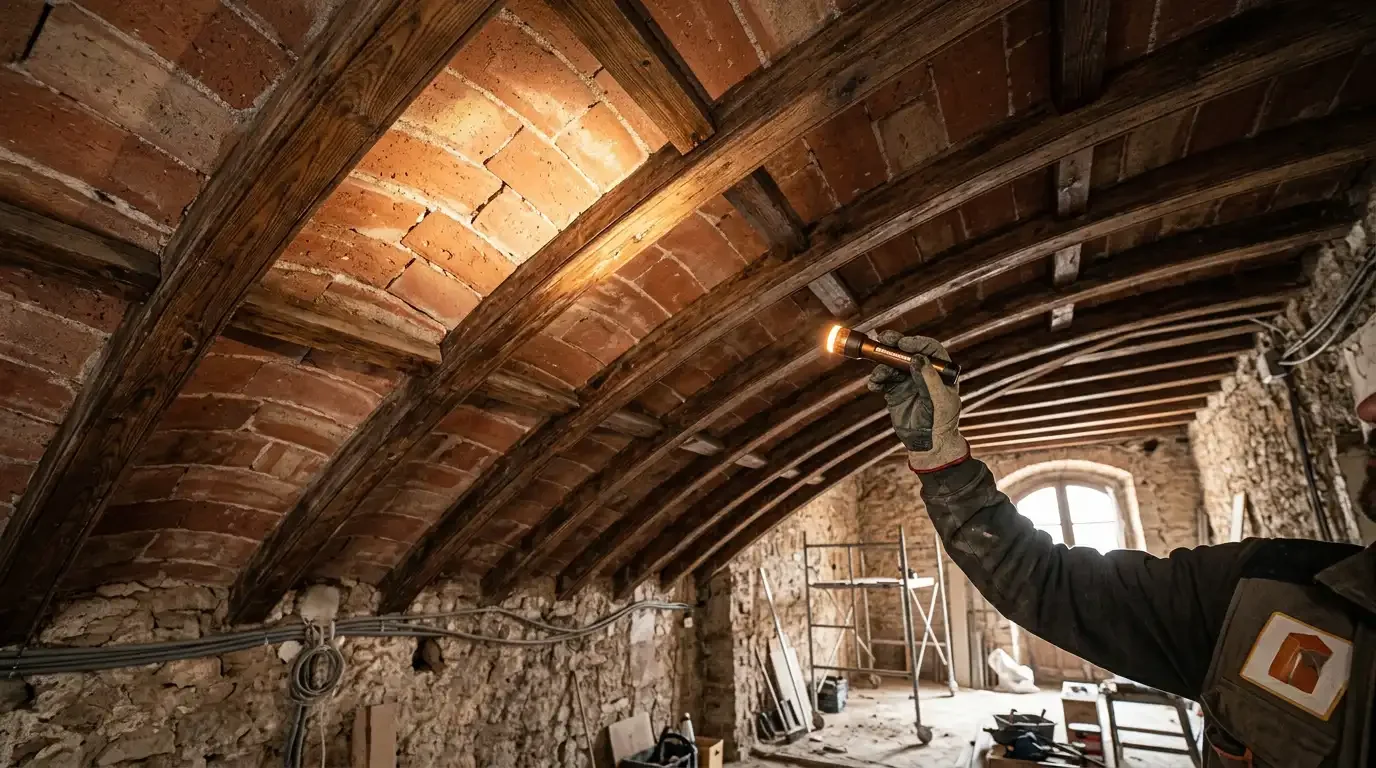
Common Technical Issues Found in Older Properties
| Inspection Area | Why It Matters | Possible Consequence |
|---|---|---|
| Electrical System | Older wiring may no longer meet current safety standards. | Expensive electrical upgrades. |
| Plumbing | Hidden leaks or ageing pipework can go unnoticed. | Water damage and repair costs. |
| Damp & Moisture | Poor insulation or ventilation may create long-term issues. | Ongoing maintenance and mould problems. |
| Roof & Communal Areas | Age-related deterioration may require major building works. | Unexpected community contributions. |
| Asbestos & Older Building Materials | Some older buildings still contain outdated construction materials. | Additional renovation costs. |
| Structural Cracks | May indicate underlying structural concerns. | Further technical investigation and repairs. |
Why Is a Technical Inspection So Important?
A technical inspection is not simply about identifying existing defects.
It also provides valuable information that helps you make better purchasing decisions.
A professional report can help you estimate renovation costs more accurately, negotiate the purchase price with greater confidence, request additional contractual protections, and identify potential expenses before they become serious financial problems.
In many cases, the cost of a technical inspection is insignificant compared with the cost of discovering hidden issues after completing the purchase.
Case Study
A client from Paris purchased what appeared to be a beautifully maintained apartment in Gràcia.
Everything looked immaculate during the viewing.
However, after their first winter in the property, significant moisture issues began to appear behind the walls.
Soon afterwards, it became clear that the entire electrical installation also required replacement.
Their renovation budget increased substantially.
Most of these problems could have been identified through a professional inspection before completion.
Looking back, their first comment was simple:
"I wish we had carried out the technical inspection before buying the apartment."
Expert Insight
A beautiful apartment is not necessarily a technically sound one.
If you are purchasing an older property—particularly one that you intend to renovate—an independent technical inspection should be considered an essential part of your due diligence.
Beyond identifying risks, the report can also strengthen your negotiating position by providing objective evidence of future repair costs.
Key Takeaways
Why does it matter?
Many serious structural and technical issues remain invisible during a standard property viewing.
What is the biggest risk?
Facing significant renovation costs shortly after completing the purchase.
What should you do?
Arrange an independent technical inspection before committing to the purchase and use the findings to support both your decision and any price negotiations.
Mistake 5: Failing to Review the Financial Health of the Community of Owners
When you buy an apartment in Barcelona, you are not only purchasing the property itself. You are also becoming part of the building's Community of Owners (Comunidad de Propietarios).
This involves much more than paying a monthly community fee. The building's financial position, previous decisions, and future maintenance plans can all have a direct impact on the real cost of owning your property.
Many buyers focus exclusively on the apartment.
In reality, some of the biggest financial risks are found in the management of the building rather than inside the property itself.
Documents You Should Request Before Buying
| Document | Why It Matters | Requested From |
|---|---|---|
| Community Financial Statements | Reveal the financial health of the building and any outstanding debts. | Building Administration |
| Minutes of Owners' Meetings | Show upcoming renovations and decisions affecting owners. | Building Administration |
| Special Assessment Decisions (Derramas) | Indicate whether additional payments are expected. | Building Administration |
| Community Rules | Clarify renovation, rental, and usage restrictions. | Building Administration |
Why Does This Matter?
Some residential buildings are managed efficiently for decades.
Others accumulate unpaid fees, postpone necessary maintenance, or approve expensive renovation projects that affect every owner.
Major façade restoration, roof repairs, lift replacements, or energy-efficiency upgrades can all result in significant additional contributions from property owners.
Understanding the building's financial position before purchasing allows you to identify these potential costs before they become your responsibility.
Buying the apartment is only one part of the investment.
Buying into the financial reality of the building is equally important.
Case Study
One of our clients purchased what appeared to be an attractively priced apartment in Sants.
The apartment itself had been thoroughly checked.
The building's community records had not.
At the first owners' meeting after completion, they learned that the building had already approved a major façade renovation together with the replacement of the lift.
Every owner was required to contribute a substantial additional payment.
Had this information been available before the purchase, it could have been used during price negotiations or even influenced the purchasing decision itself.
Expert Insight
Community documents do far more than describe the building's current financial situation.
They often provide valuable insight into expenses that may arise over the next several years.
Reviewing these documents carefully before committing to a purchase can sometimes change the entire investment decision. Buying the right property is only the beginning. Managing it properly afterwards is equally important, especially if you live abroad.
Key Takeaways
Why does it matter?
When you buy an apartment, you also take on your share of the building's financial responsibilities.
What is the biggest risk?
Unexpected community charges arising shortly after you complete the purchase.
What should you do?
Review the community accounts, owners' meeting minutes, and any approved or proposed derramas before signing the purchase contract.
Mistake 6: Miscalculating Taxes and Your Real Rental Return
Many buyers who purchase property in Barcelona as an investment focus almost entirely on the expected monthly rental income.
In reality, rental income alone tells only part of the story.
The true performance of an investment is measured by net rental yield—the amount that remains after taxes, community fees, maintenance costs, insurance, vacancy periods, and other operating expenses have been deducted.
Ignoring these costs can create unrealistic expectations and significantly reduce the return you actually receive.
Understanding your net income before buying allows you to make more informed investment decisions and compare properties more accurately.
Expenses That Affect Your Rental Return
| Expense | Why It Matters | Who It Applies To |
|---|---|---|
| Rental Income Tax | Tax rates vary depending on your residency and tax status. | All investors |
| IBI (Property Tax) | Annual municipal property tax. | Property owner |
| Community Fees | Covers the maintenance of shared areas and building services. | Property owner |
| Maintenance & Repairs | Unexpected repairs can reduce annual profitability. | Property owner |
| Vacancy Periods | Few properties remain occupied every day of the year. | Investment properties |
Why Is This Calculation So Important?
At first glance, a property offering a 5% gross rental yield may appear to be an excellent investment.
However, once taxes, community fees, maintenance costs, insurance, and periods without tenants are taken into account, the actual return may look very different.
For this reason, relying solely on the rental figures shown in property listings rarely provides an accurate picture.
A sound investment decision should always be based on net income, not gross income.
Case Study
One of our clients purchased an apartment in Barcelona with the primary goal of generating rental income.
On paper, the projected gross rental yield looked highly attractive.
After the first year, however, taxes, community fees, minor renovation costs, and periods between tenants significantly reduced the property's actual profitability.
The investment itself was not the problem.
The problem was that the financial analysis had been based on gross income rather than the property's real operating costs.
Expert Insight
When evaluating an investment property, avoid asking:
"How much rent will this property generate each year?"
Instead, ask:
"How much will this property actually earn after every expense has been paid?"
This simple shift in perspective often leads to far better investment decisions.
Key Takeaways
Why does it matter?
Gross rental income does not reflect the true performance of an investment.
What is the biggest risk?
Making a purchasing decision without accounting for taxes and ongoing operating costs.
What should you do?
Prepare a realistic net rental yield analysis before purchasing and include every recurring expense in your calculations.
Mistake 7: Choosing the Property Before Choosing the Neighbourhood
One of the biggest decisions you will make when buying property in Barcelona is not choosing the apartment itself.
It is choosing the neighbourhood where you will live.
Even within the same district, the atmosphere can change dramatically from one street to the next.
A quiet street during the day may become lively late into the evening.
Tourist areas can feel completely different in summer than they do during the winter months.
Some neighbourhoods are better suited to long-term investment, while others offer a higher quality of life for permanent residents.
For this reason, relying solely on property photographs or a single viewing is rarely enough to make a confident decision.
How Should You Evaluate a Neighbourhood?
| What to Check | Why It Matters | Recommendation |
|---|---|---|
| Visit at Different Times | Experience how the neighbourhood changes throughout the day. | Visit on weekdays and weekends. |
| Explore on Foot | Understand the area's everyday atmosphere. | Walk to local cafés, supermarkets and parks. |
| Speak with Local Residents | Gain insight into everyday life in the neighbourhood. | Ask a few simple questions if the opportunity arises. |
| Review Future Urban Projects | Major developments may affect your investment. | Check municipal planning information. |
Why Does This Matter?
You can renovate an apartment. You can redesign every room. You can completely transform the interior.
What you cannot change is the neighbourhood.
For that reason, a large part of your purchasing decision is not really about the property itself.
It is about the environment where you will spend your everyday life.
In a city as diverse as Barcelona, every neighbourhood has its own character, rhythm, and lifestyle.
Finding the right location is often just as important as finding the right home.
Case Study
A couple from Zurich purchased a stylish modern apartment in Poblenou.
They visited the area several times during the daytime and immediately fell in love with the property.
After moving in, they realised that the neighbourhood felt very different in the evenings than they had expected.
They enjoyed taking evening walks together, but some of the surrounding streets became much quieter than they had imagined.
There was nothing wrong with the apartment itself.
The issue was simply that the neighbourhood did not match their lifestyle.
A few additional visits at different times of day would almost certainly have helped them make a more informed decision.
Expert Insight
You cannot truly understand a neighbourhood by browsing property portals.
If possible, spend several hours there before making your decision. Sit in a local café. Visit a supermarket. Take an evening walk.
Experience the area as if you already lived there, not as a visitor, but as a future neighbour.
If you're moving from abroad, choosing the right neighbourhood is often just as important as choosing the property itself. Our Relocation Services can help you find the area that best matches your lifestyle.
Key Takeaways
Why does it matter?
Choosing the right neighbourhood is just as important as choosing the right property.
What is the biggest risk?
Discovering after completion that the area does not suit your lifestyle or long-term plans.
What should you do?
Visit the neighbourhood several times, on different days and at different times, before making your final decision.
Mistake 8: Underestimating the Renovation Process
Buying an older apartment in Barcelona and transforming it into your ideal home can be an excellent investment.
Many of the city's most beautiful homes are the result of carefully planned renovations.
However, renovation projects are rarely as straightforward as they first appear.
Building permits may be required.
Approval from the Community of Owners may be necessary.
Hidden structural or technical issues often emerge once work begins.
For this reason, a renovation budget should never be based solely on the finishes you can see during a viewing.
It should also allow for the unexpected.

What Should You Consider Before Planning a Renovation?
| Consideration | Why It Matters | Planning Advice |
|---|---|---|
| Building Permits | Many renovation projects require municipal approval. | Allow additional time in your schedule. |
| Community Approval | Works affecting communal areas may require authorisation. | Confirm the rules before purchasing. |
| Older Building Risks | Hidden structural or technical issues may only appear during construction. | Arrange a professional technical inspection. |
| Budget Flexibility | Renovation costs often exceed the initial estimate. | Include a contingency fund. |
Why Does This Matter?
Renovation is much more than an interior design project.
It is also a technical, legal, and financial process.
Particularly in older buildings, opening walls or replacing installations often reveals issues that could not have been identified during a standard property viewing.
A well-prepared renovation plan helps you control not only your budget, but also your timeline and expectations.
The better prepared you are before purchasing, the fewer surprises you are likely to encounter afterwards.
Case Study
One of our clients from Turkey purchased an older apartment in Eixample with plans to renovate only the kitchen and bathroom.
Once work began, the electrical system had to be completely replaced.
Shortly afterwards, moisture problems were discovered behind several walls.
The Community of Owners also required additional approval before the windows could be replaced.
The renovation was ultimately successful.
However, both the budget and the completion date exceeded the original plan.
Looking back, the client told us that the first thing they would do differently would be to prepare a far more detailed technical and financial renovation plan before buying the property.
If you are planning to renovate after purchasing, proper project planning and local coordination can save both time and money.
Expert Insight
When preparing your renovation budget, don't focus only on the quotations you receive from contractors.
Older properties almost always reveal unexpected issues once work begins.
Allowing an additional contingency budget from the start is one of the simplest ways to avoid unnecessary stress.
The most successful renovation projects are rarely the cheapest.
They are the ones that have been planned realistically from the beginning.
Key Takeaways
Why does it matter?
Renovation projects involve technical, legal, and financial considerations—not just design decisions.
What is the biggest risk?
Unexpected structural problems increasing both your renovation budget and your completion timeline.
What should you do?
Discuss your renovation plans with experienced professionals before purchasing and include a realistic contingency budget for unforeseen work.
Mistake 9: Leaving Your Mortgage Application Until the Last Minute
If you intend to finance your purchase with a mortgage, one of the smartest decisions you can make is to organise your financing before you start searching for a property.
Many buyers do exactly the opposite.
They first find the apartment they want and only then begin speaking with banks.
For international buyers, this can create unnecessary pressure.
Mortgage applications often take longer than expected.
Banks may request additional documentation.
Income verification can be more detailed than anticipated.
The amount you expected to borrow may also differ from the amount ultimately approved.
Beginning your property search without understanding your financing options can therefore introduce avoidable risks into the entire buying process.
Preparing for a Mortgage Application
| Preparation Step | Why It Matters | Recommendation |
|---|---|---|
| Obtain Mortgage Pre-Approval | Helps define your realistic purchasing budget. | Complete this before viewing properties. |
| Prepare Your Documents | Missing paperwork can delay the approval process. | Organise income and financial documents in advance. |
| Compare Multiple Banks | Mortgage terms can vary considerably. | Review several offers before deciding. |
| Review the Mortgage Contract | Ensures you fully understand the loan conditions. | Discuss the agreement with your lawyer. |
Why Does This Matter?
Property purchases can move surprisingly quickly.
Once your offer has been accepted, your financing often needs to progress at the same pace.
If your mortgage application has not yet begun, you may find yourself making important financial decisions under significant time pressure.
That pressure can weaken your negotiating position, delay the transaction, or even place the purchase at risk.
Preparing your financing in advance gives you greater confidence throughout the entire buying process.
Case Study
One of our clients from the United States finally found the apartment they had been searching for.
Their offer was accepted almost immediately.
The problem was that they had not yet started their mortgage application.
The bank requested additional documentation, extending the approval process well beyond the expected timeframe.
The purchase was eventually completed.
However, the client experienced unnecessary stress and had to explore alternative financing options while waiting for the bank's decision.
Afterwards, they told us that obtaining mortgage pre-approval would have been their very first step if they had gone through the process again.
Expert Insight
A mortgage is more than a financial product.
It is an important part of your purchasing strategy.
Buyers who already have mortgage pre-approval know exactly what they can afford and often present themselves as stronger, more reliable purchasers during negotiations.
Taking the time to organise your financing before searching for a property usually makes the entire buying experience significantly smoother.
Key Takeaways
Why does it matter?
Preparing your financing early helps the entire purchase process move more smoothly.
What is the biggest risk?
Mortgage delays disrupting your purchase timetable or putting the transaction at risk.
What should you do?
Obtain mortgage pre-approval before beginning your property search and prepare all required documentation in advance.
Mistake 10: Basing Your Purchase Decision on the Golden Visa
For many years, Spain's Golden Visa programme encouraged non-EU buyers to invest in Spanish real estate by offering a residency pathway linked to property purchases above a certain value.
As a result, some international buyers viewed purchasing property not only as a real estate investment but also as an immigration strategy.
However, the legal framework has changed.
The Spanish Golden Visa programme has now been discontinued for new applicants.
If residency in Spain is one of your long-term goals, your property purchase should no longer be planned around obtaining a Golden Visa.
Instead, you should seek professional immigration advice to understand which residency options are currently available and how they relate to your personal circumstances.
Why Does This Matter?
Property ownership and residency are two separate legal matters.
Buying a property in Barcelona does not automatically give you the right to live in Spain.
Many buyers incorrectly assume that purchasing real estate creates an automatic pathway to residency.
Today, that assumption can lead to costly planning mistakes.
If your long-term objective is to relocate to Spain, your immigration strategy should be developed independently from your property search.
Current Approach
| Question | Why It Matters | Recommended Action |
|---|---|---|
| Do you need Spanish residency? | Your immigration status affects your long-term plans. | Review your residency options before purchasing. |
| Are you relying on outdated information? | Property and immigration regulations can change. | Verify current legislation with an immigration specialist. |
| Is the property purchase part of your relocation plan? | Buying a home and obtaining residency follow different legal processes. | Plan both processes separately. |
Case Study
A couple from Canada began searching for property in Barcelona after reading several articles about Spain's Golden Visa programme.
They assumed that purchasing a property above the previous investment threshold would automatically allow them to obtain residency.
Only after speaking with an immigration adviser did they discover that the programme was no longer available to new applicants.
Fortunately, they learned this before completing the purchase.
They adjusted their relocation plans, explored alternative residency options, and continued their property search with realistic expectations.
The apartment they eventually purchased was still the right investment.
The difference was that their buying decision was no longer based on an immigration programme that no longer existed.
Expert Insight
Property legislation and immigration legislation evolve independently.
Information that was accurate only a year ago may no longer apply today.
Whenever residency plays an important role in your purchasing decision, verify the latest legal requirements with a qualified immigration specialist before making any financial commitment.
Many international buyers who relocate to Barcelona also need practical support beyond the property purchase itself.
Key Takeaways
Why does it matter?
Buying property in Spain no longer provides access to the former Golden Visa programme.
What is the biggest risk?
Making a major investment based on outdated immigration information.
What should you do?
Treat your property purchase and your residency planning as two separate processes, and seek professional advice for both.
Final Checklist Before Buying Property in Barcelona
Before signing a reservation agreement or purchase contract, make sure you can answer "yes" to each of the following questions.
□ Have I reviewed a recent Nota Simple?
□ Do I understand the full cost of buying the property, beyond the purchase price?
□ Am I working with an independent property lawyer?
□ Has the property been technically inspected where appropriate?
□ Have I reviewed the Community of Owners' financial documents and meeting minutes?
□ Have I calculated the property's net rental yield rather than relying only on gross income?
□ Have I spent enough time exploring the neighbourhood at different times of day?
□ Do I have a realistic renovation budget, including contingency funds?
□ Is my mortgage financing organised or pre-approved?
□ Am I basing my decision on current residency rules rather than outdated Golden Visa information?
Completing this checklist will not eliminate every possible risk, but it will significantly improve your ability to make informed decisions and avoid many of the costly mistakes that affect international buyers.
Conclusion
Buying property in Barcelona is about far more than finding the right apartment.
It involves understanding the legal process, evaluating financial risks, planning ahead, and making informed decisions at every stage.
The good news is that most expensive mistakes are entirely preventable.
With the right preparation, experienced professional guidance, and a clear understanding of the buying process, purchasing property in Barcelona can become a secure and rewarding long-term investment.
Whether you are looking for a permanent home, a holiday apartment, or an investment property, informed decisions today can save considerable time, money, and stress tomorrow.
Thinking About Buying Property in Barcelona?
Finding the right property involves much more than browsing online listings.
From choosing the right neighbourhood and carrying out legal checks to arranging technical inspections and planning future renovations, every step plays an important role in the quality of your investment.
At Casas Con Cariño, we guide international buyers through every stage of the purchasing journey, helping them make informed decisions with confidence.
Whether you're buying your first home in Barcelona or investing in property for the future, we're here to make the process smoother, safer, and significantly less stressful.
Frequently Asked Questions
Do I need a Spanish residence permit to buy property in Barcelona?
No. You do not need to be a Spanish resident to purchase property in Barcelona.
However, most buyers will need an NIE (Número de Identidad de Extranjero), which is the identification number required for foreign nationals carrying out legal and financial transactions in Spain.
The property purchase process and the residency application process are separate legal procedures.
What are the main additional costs when buying property in Barcelona?
In addition to the purchase price, buyers should budget for property taxes, notary fees, Land Registry fees, legal costs, and—if financing the purchase—a mortgage valuation and any related expenses.
Understanding the total acquisition cost, rather than focusing only on the asking price, is essential for realistic financial planning.
What is a Nota Simple, and why is it important?
A Nota Simple is an official extract from the Spanish Land Registry that provides key legal information about a property. It identifies the registered owner and reveals mortgages, liens, legal charges, and other registered obligations.
Reviewing a recent Nota Simple before purchasing helps identify potential legal risks before you commit.
Should I arrange a technical inspection before buying an older apartment?
Yes, particularly if you're purchasing an older property.
Issues such as outdated electrical systems, ageing plumbing, damp, roof defects, or problems affecting communal areas may not be visible during a standard viewing.
An independent technical inspection can help uncover hidden issues and reduce the risk of unexpected renovation costs.
Why should I review the Community of Owners' documents?
The Community of Owners manages the building's finances and shared responsibilities.
Reviewing meeting minutes and financial records helps you understand whether major works—such as façade restoration, roof repairs, or lift replacement—have already been approved or are likely to be required in the near future.
These projects can result in significant additional costs for property owners.
When should I apply for a mortgage?
Ideally, before you begin searching for a property.
Obtaining mortgage pre-approval helps define your realistic budget, strengthens your negotiating position, and reduces the risk of delays once your offer has been accepted.
Does buying property in Barcelona give me the right to live in Spain?
No.
Under the current regulations, purchasing property alone does not grant Spanish residency.
If relocating to Spain is one of your goals, you should explore the residency options available under current immigration law independently of your property search.
Is buying property in Barcelona still a good investment?
That depends on your objectives.
A successful investment should be evaluated by considering location, purchase costs, taxes, expected rental income, ongoing expenses, and long-term capital appreciation, not simply the asking price or advertised rental figures.
A thorough financial analysis is always recommended before making a purchase.
Is it mandatory to hire an independent property lawyer?
No.
Spanish law does not require buyers to appoint their own lawyer.
However, particularly for international buyers, working with an independent property lawyer provides valuable protection by reviewing contracts, identifying legal risks, and ensuring your interests are represented throughout the transaction.
How long does the property buying process usually take?
The timeframe depends on several factors, including the type of financing, document preparation, and the circumstances of both buyer and seller.
When all documentation is ready and financing has been arranged in advance, the process is generally faster and more straightforward.
Do I need an NIE number to buy property in Barcelona?
Yes.
Foreign buyers must obtain an NIE (Número de Identidad de Extranjero) before completing a property purchase in Spain.
The NIE is required for signing the deed of sale, paying taxes, opening a bank account, and completing many other official procedures.
Can foreigners get a mortgage in Spain?
Yes.
Many Spanish banks offer mortgage products to non-resident and international buyers.
The amount you can borrow and the lending conditions will depend on factors such as your income, country of residence, financial profile, and the bank's own lending criteria.
Last updated: July 2026