How to Buy an Apartment in Barcelona from Abroad Without Visiting

A calm, practical guide for international buyers who want to own property in Barcelona without boarding a flight for every signature.
The Distance Is Not the Barrier. The Unknown Is.
You have seen the listings. You have compared the neighborhoods. You have run the numbers. And now you are wondering whether you can actually complete a property purchase in Barcelona without being physically present.
The short answer is yes. The longer answer is: yes, but only if you understand the sequence, the people, and the paperwork.
Barcelona is one of Europe's most active property markets for international buyers. From the elegant boulevards of Eixample to the village like squares of Gràcia, from the creative energy of Poblenou to the emerging charm of Sant Antoni, the city offers something for every investor profile. But buying from abroad requires a different approach than buying as a local. This guide walks you through that approach, step by step, without the overwhelm.
Table of Contents
Why People Buy Barcelona Property Without Visiting
International buyers purchase Barcelona apartments remotely for three main reasons. Some are investors who see the city's rental market and capital growth potential. Others are planning a future relocation and want to secure a home before they move. And some are simply time poor: they know what they want, they trust the process, and they would rather delegate the legwork than take multiple flights.
Barcelona's property market is particularly suited to remote buying because the legal framework is transparent, the notary system is centralized, and digital tools have made long distance transactions increasingly smooth. A well chosen apartment in Eixample or Gràcia can appreciate steadily while generating rental income. A carefully selected flat in Poblenou or Sant Antoni can ride the wave of neighborhood transformation. The key is not being there. The key is knowing what to look for, and who to trust.
If you are still exploring whether Barcelona is the right market for you, our Property Buying team offers personalized guidance for international investors at every stage.
What You Actually Need Before You Start
Before you browse listings or contact agents, secure three things. Without them, nothing else moves.
1. The NIE (Número de Identificación de Extranjero)
The NIE is your Spanish tax identification number. It is not optional. You cannot sign a purchase deed, open a Spanish bank account, or pay property taxes without it. As a non resident, you apply for the NIE through a Spanish consulate in your home country or through a representative in Spain. The process typically takes two to six weeks. Once issued, the NIE remains valid indefinitely. Apply for this first. Everything else waits.
2. A Spanish Bank Account
You will need a Spanish account to transfer the purchase funds, pay the deposit, and set up direct debits for utilities and taxes. Most major Spanish banks offer non resident accounts. You will need your passport, NIE, and proof of address. Some banks allow remote account opening through a power of attorney. Others require at least one in person visit. Ask upfront. Do not assume all banks have the same policy.
3. A Power of Attorney (Poder Notarial)
This is the document that allows someone in Barcelona to act on your behalf. You can grant power of attorney to a Spanish lawyer, a gestor, or a trusted representative. The document must be notarized, and if signed outside Spain, it typically requires an apostille under the Hague Convention. With a valid power of attorney, your representative can sign reservation contracts, attend the notary, register the property, and handle tax payments, all without you setting foot in Spain.
The Step-by-Step Process from Abroad
Buying property in Barcelona from abroad follows a clear sequence. Understanding each stage removes the anxiety.
Step 1: Property Search and Shortlisting
Start with clear criteria. Budget, size, neighborhood, condition, and purpose. Are you buying for personal use, long term rental, or short term rental? Each purpose leads to different neighborhoods and different legal considerations. Barcelona's valor de referencia system sets a reference price for every property, which affects your tax liability regardless of what you actually pay. Your agent or lawyer should check this value before you make an offer.
Request video tours, not just photos. Ask for floor plans. Verify the building's age, the community fees, and any pending works. In older Eixample buildings, check whether the electrical system has been updated. In Gràcia, confirm whether the building has an elevator if you are considering upper floors. In Poblenou, verify the zoning status if you plan to rent commercially.
Step 2: The Reservation Deposit (Señal or Reserva)
Once you choose a property, you typically pay a reservation deposit of €3,000 to €6,000 to take it off the market. This is usually accompanied by a simple reservation contract. The deposit is refundable if the seller backs out, but not if you do, unless specific conditions are written into the contract. Have your lawyer review this document before you sign or authorize payment. Never send a reservation deposit to a private individual's personal account. It should always go to an escrow or the agency's client account.
Step 3: Due Diligence from a Distance
This is where your lawyer earns their fee. They will request a Nota Simple from the Land Registry, which confirms the legal owner, any mortgages, liens, or encumbrances, and the property's exact description. They will also check:
Whether the property has outstanding community fees or special assessments
Whether the seller has paid the latest IBI (municipal property tax)
Whether the cadastral description matches the physical reality
Whether there are any urban planning restrictions or pending expropriations
This stage typically takes one to two weeks. Do not skip it, and do not let anyone pressure you into moving faster.
Step 4: The Arras Contract (Contrato de Arras)
The arras is the binding preliminary contract. You pay typically 10% of the purchase price, and both parties commit to completing the sale. If the seller backs out, they must return double your deposit. If you back out, you forfeit the deposit. The arras contract should specify the final price, the completion date, any conditions precedent (such as mortgage approval), and who pays which costs. Your lawyer should draft or review this contract. Do not use a template downloaded from the internet.
Step 5: Mortgage Approval (If Applicable)
Spanish banks will lend to non residents, typically up to 60% of the property value, sometimes 70% for EU citizens. The application process takes four to eight weeks. You will need proof of income, tax returns, bank statements, and employment verification. Some banks require a face to face meeting; others accept video interviews. Start this process before you find a property, so you know your budget with certainty.
Step 6: Notary Appointment and Signing the Deed (Escritura)
The final sale takes place before a Spanish notary. If you cannot attend, your representative attends with your power of attorney. The notary reads the deed aloud, verifies identities, and ensures both parties understand the terms. You then transfer the remaining funds, and the keys are handed over. The notary does not represent you. They are a neutral public official. Your lawyer is your advocate.
Step 7: Registration and Tax Payment
After signing, the deed must be registered at the Land Registry. Your lawyer or gestor handles this. You must also pay the Property Transfer Tax (ITP) within 30 days of signing. In Catalonia, ITP is 10% of the purchase price for most properties, rising to 11% for amounts above €1,000,000. This is one of the highest rates in Spain, so budget accordingly.
| Step | Action | Timeline | Who Handles It |
|---|---|---|---|
| 1 | Property search and shortlisting | 2–4 weeks | You + buyer's agent |
| 2 | Reservation deposit | Within days of decision | You, via transfer or representative |
| 3 | Due diligence (Nota Simple, community checks) | 1–2 weeks | Your lawyer |
| 4 | Arras contract (10% deposit) | After due diligence clears | Your lawyer drafts, you sign remotely |
| 5 | Mortgage approval (if needed) | 4–8 weeks | You + Spanish bank |
| 6 | Notary signing (Escritura) | On agreed completion date | Notary + your representative |
| 7 | Registration and ITP payment | Within 30 days of signing | Your lawyer or gestor |
What It Actually Costs Beyond the Price Tag
The purchase price is only part of the story. Here is a realistic breakdown of the additional costs you will face when buying an apartment in Barcelona.
| Cost | Typical Amount | Notes |
|---|---|---|
| Property Transfer Tax (ITP) | 10% of purchase price (11% above €1M in Catalonia) | Highest in Spain alongside Valencia. Budget generously. |
| Notary and Land Registry fees | €1,500–€3,000 | Scales with property price. Fixed by official tariff. |
| Legal fees (lawyer) | €1,500–€3,000 (or 1% of price) | Worth every euro for due diligence and contract review. |
| Gestor fees | €300–€600 | Handles NIE applications, tax registrations, and ongoing compliance. |
| Property valuation (if mortgaged) | €300–€500 | Required by the bank. Independent of the purchase price. |
| Mortgage arrangement fees | 1%–2% of loan amount | Varies by bank. Some charge opening fees, others do not. |
| Building survey (optional but wise) | €400–€800 | Especially valuable for pre-1970s buildings in Eixample and Gràcia. |
| Currency exchange margin | 1%–3% of transferred amount | Use a specialist broker, not your retail bank, for large transfers. |
Total budget rule: Add approximately 12% to 15% to the purchase price for a resale property in Barcelona. For a €400,000 apartment, expect €48,000 to €60,000 in additional costs. This is not a small number, and it surprises many first time international buyers.
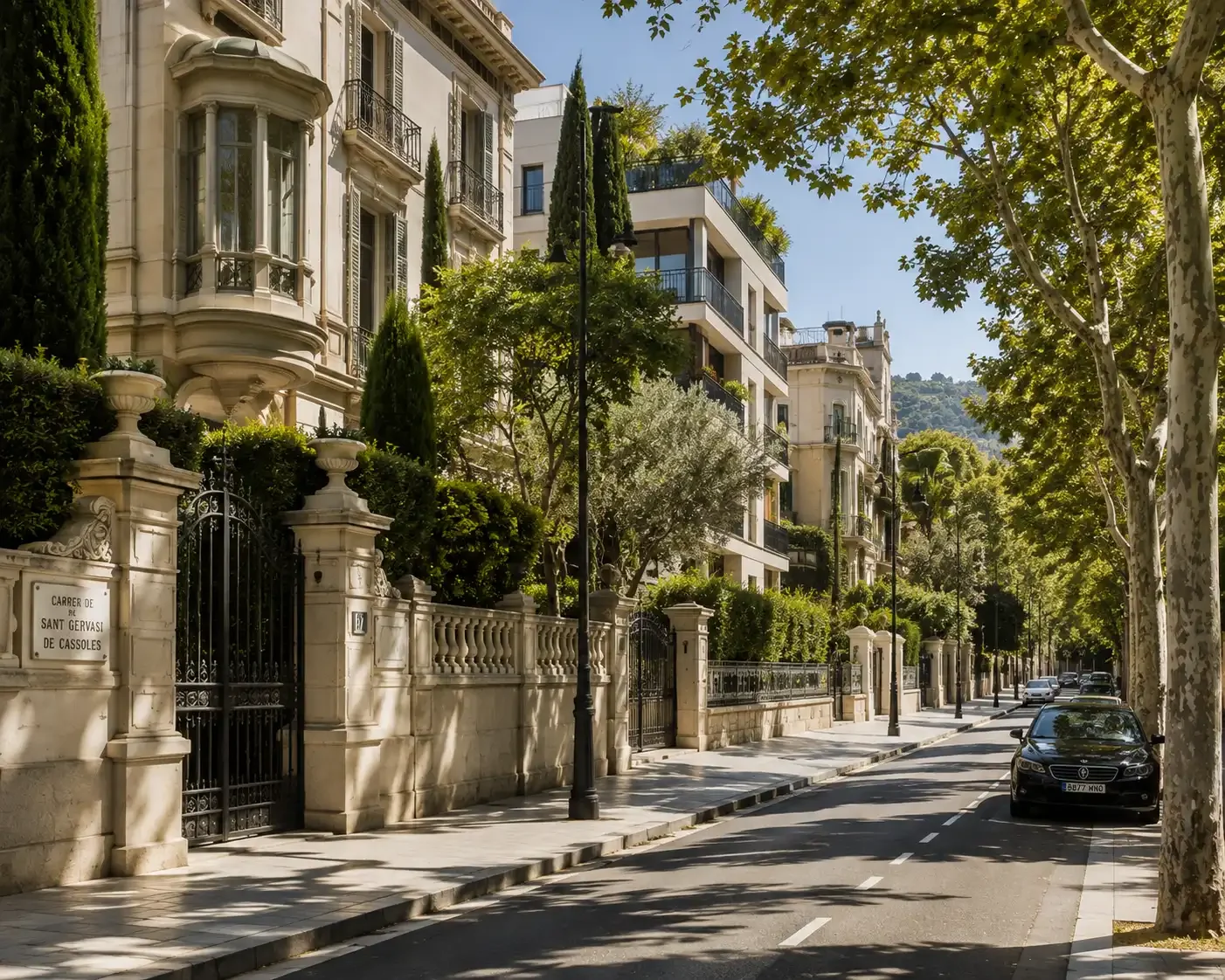
Which Neighborhoods Work Best for Remote Buyers
Not all Barcelona neighborhoods suit the remote buyer equally. Some require more local knowledge. Some carry higher renovation risk. Some offer better rental yields. Here is a practical comparison.
| Neighborhood | Best For | Typical Building Stock | Remote Buyer Considerations |
|---|---|---|---|
| Eixample | Stability, resale value, classic Barcelona | 1880s–1920s modernista blocks, high ceilings, original features | High demand, liquid market. Older buildings may need electrical and plumbing updates. Elevators not always present. Premium prices. |
| Gràcia | Character, village atmosphere, strong rental demand | Mix of 19th-century and mid-century buildings | Very popular with long-term tenants. Narrow streets can complicate renovations. Community of owners often active and vocal. |
| Poblenou | Growth potential, tech workers, modern living | Industrial conversions, new builds, 1960s blocks | Rapidly gentrifying. Good for furnished rentals to digital nomads. Check zoning carefully. Some areas still transitional. |
| Sant Antoni | Value, emerging area, food and culture scene | Early 20th-century buildings with some newer infill | More affordable than Eixample but rising fast. Good renovation potential. Verify building condition carefully; some blocks need significant work. |
| Les Corts | Family oriented, quieter, good transport | 1950s–1980s apartment blocks, some older villas | Less touristy, more stable long-term rental market. Buildings generally newer and better maintained than central districts. |
| Sarrià | Upscale, green, exclusive | Mix of elegant older buildings and high-end modern developments | Highest prices outside the city center. Narrow streets in old Sarrià can limit renovation access. Strongest capital preservation. |
Which Professional Do You Actually Need?
Buying property in Barcelona from abroad involves several professionals. Understanding who does what prevents overlap, gaps, and unnecessary fees.
| Professional | When You Need Them | What They Do |
|---|---|---|
| Property Lawyer (Abogado) | Always | Reviews contracts, conducts due diligence, represents you at the notary if you grant power of attorney. Your primary legal protection. |
| Buyer's Agent | When you want access to off-market listings and negotiation support | Searches properties, arranges viewings or video tours, negotiates price, and liaises with sellers. Works for you, not the seller. |
| Gestor Administrativo | Always | Handles NIE applications, tax registrations, utility transfers, and ongoing bureaucratic compliance. Essential for non-residents. |
| Mortgage Broker | When you need financing | Compares Spanish bank offers, negotiates terms, and handles paperwork. Saves time and often secures better rates than approaching banks directly. |
| Tax Advisor | When you want to plan ownership structure and ongoing tax obligations | Advises on ITP, annual non-resident taxes, wealth tax, and rental income tax. Coordinates with your home-country tax position. |
| Property Manager | When you will not live in the apartment | Manages keys, utilities, maintenance, and tenant relations after purchase. Critical for overseas owners. |
Quick Decision Rule:
Cash purchase, simple flat, no renovation? You need a lawyer and a gestor.
Need help finding the right property? Add a buyer's agent.
Need a mortgage? Add a mortgage broker.
Planning to rent it out? Add a property manager and a tax advisor.
Buying a building that needs work? Add an architect for structural assessment before you commit.
Our Property Buying service connects international buyers with vetted lawyers, agents, and mortgage specialists who understand the remote purchase process. And if you are planning to move to Barcelona, our Relocation Services can handle your NIE, bank account, and settling in before you even arrive.
Red Flags in Listings and Contracts
| Red Flag | Green Flag |
|---|---|
| Seller pressures you to skip due diligence | Seller provides complete documentation without hesitation |
| Price is significantly below market rate | Price aligns with comparable sales and valor de referencia |
| No Nota Simple available | Nota Simple is provided within 48 hours |
| Community fees are unusually low and may signal deferred maintenance | Community fees are transparent and consistent with building age |
| Agent represents both buyer and seller | You have independent legal representation |
| Arras contract is one page and vague | Arras contract is detailed, reviewed by your lawyer, with clear exit clauses |
| Payment requested to personal account | All payments go to verified escrow or official accounts |
Your Remote Buyer Checklist
Before You Start Searching
Apply for your NIE through the Spanish consulate or a representative
Open a Spanish bank account or confirm your bank accepts remote opening
Define your budget including the 12–15% additional purchase costs
Decide your purpose: personal use, long term rental, or investment
Research Barcelona neighborhoods that match your goals
When You Find a Property
Request a video tour and detailed floor plan
Check the valor de referencia on the Catastro website
Verify community fees and any pending special assessments
Have your lawyer request the Nota Simple immediately
Confirm the building's age and typical maintenance issues
Before You Sign Anything
Review the reservation contract with your lawyer
Ensure the arras contract includes clear conditions and exit clauses
Confirm your power of attorney is valid and covers the transaction
Verify mortgage approval (if applicable) before committing
Understand the full tax implications with a qualified advisor
After You Complete
Register the property at the Land Registry
Pay ITP within 30 days
Transfer utilities to your name
Set up direct debits for IBI and community fees
Arrange property insurance
Engage a property manager if you will not be living there

Frequently Asked Questions
Can I really buy property in Barcelona without ever visiting?
Yes. Many international buyers complete the entire process remotely. The key is having a reliable power of attorney, a trusted lawyer, and a clear communication system. Video tours, digital signatures, and online banking make this entirely feasible.
Do I need a Spanish lawyer, or can I use my lawyer from home?
You need a Spanish lawyer licensed to practice in Catalonia. Your home country lawyer can advise on the broader structure, but only a Spanish abogado can represent you before the notary, review Spanish contracts, and ensure compliance with Catalan property law.
How long does the entire purchase process take?
From first viewing to keys in hand, typically eight to sixteen weeks. Cash purchases move faster. Mortgaged purchases take longer due to bank approval timelines. Complex due diligence or seller delays can extend this further.
Can I get a mortgage as a non resident?
Yes. Spanish banks lend to non residents, usually up to 60% of the property value, occasionally 70% for EU citizens. You will need proof of income, tax returns, and bank statements. Interest rates are competitive but slightly higher than for residents.
What is the valor de referencia, and why does it matter?
The valor de referencia is the Spanish tax authority's reference value for each property, set by the Catastro. It is used to calculate your ITP liability. If you pay significantly more than this value, you may still be taxed on the higher of the two figures. Always check it before making an offer.
Do I need to speak Spanish?
No, but it helps. Many real estate agents, lawyers, and notaries in Barcelona speak English, especially those who work with international clients. However, all official documents are in Spanish or Catalan. Your lawyer should provide translations of anything you sign.
What happens if the seller backs out after arras?
Under Spanish law, if the seller backs out after signing the arras contract, they must return double your deposit. If you back out, you forfeit the deposit. Make sure the arras contract clearly defines these terms and any exceptions.
Can I buy in a company name or trust?
Yes, but the tax implications change significantly. Corporate ownership may trigger different ITP rates, ongoing accounting obligations, and wealth tax treatment. Consult a Spanish tax advisor before choosing this structure, as it is not always advantageous for individual investors.
What are community fees, and how much are they?
Community fees are your share of the building's running costs: elevator maintenance, cleaning, insurance, and communal repairs. In Barcelona, they typically range from €60 to €250 per month depending on the building's size, age, and amenities. Older buildings in Eixample with elevators and porters tend toward the higher end.
Should I get a building survey?
For any property built before 1970, yes. Barcelona's older buildings are beautiful but can hide expensive problems: outdated electrical systems, galvanized plumbing, humidity damage, and structural wear. A survey costs €400 to €800 and can save you tens of thousands in surprises.
What is a gestor, and do I need one?
A gestor is an administrative professional who navigates Spanish bureaucracy. They are not lawyers, but they are experts at paperwork. For non resident buyers, a gestor is invaluable for NIE applications, tax registrations, utility transfers, and ongoing compliance. Most international buyers find them essential.
Can I renovate immediately after buying?
Only after checking permit requirements. Cosmetic work may need only an Assabentat notification. Layout changes require a Licencia de Obra Menor with an architect's technical project. Always start with a Consulta Prèvia on the Barcelona city website. Our Design & Architecture team can assess renovation potential before you even complete the purchase.
How do I handle the property after purchase if I live abroad?
Engage a property manager. They handle keys, utilities, maintenance, tenant relations, and emergency repairs. For overseas owners, this is not a luxury. It is the difference between a well maintained investment and a slowly deteriorating liability. Our Property Management service is designed specifically for this scenario.
Is Barcelona a good city for property investment?
Barcelona has historically offered solid capital appreciation and rental demand, particularly in central neighborhoods like Eixample, Gràcia, and Poblenou. However, returns vary by neighborhood, building condition, and rental strategy. The city also has strict short term rental regulations, so understand the legal framework before buying for Airbnb style income.
What currency risks should I consider?
If your income is in pounds, dollars, or another currency, exchange rate fluctuations affect your purchase cost and ongoing expenses. Consider using a currency broker for large transfers, and budget for a 5% currency swing in either direction. Some buyers choose to fix exchange rates in advance using forward contracts.
A Final Thought
Buying an apartment in Barcelona from abroad is not a leap of faith. It is a sequence of deliberate steps, each one verifiable, each one manageable. The distance between you and the city is not measured in miles. It is measured in how well you prepare.
Get your NIE. Find your lawyer. Define your neighborhood. And then move forward with the calm confidence of someone who has done the work, not the anxious hesitation of someone who is guessing.
Barcelona has been waiting for owners like you for centuries. The city is not going anywhere. Take your time. Do it right.
Ready to start your Barcelona property search from abroad? At Casas con Cariño, we help international buyers identify the right apartment, the right neighborhood, and the right team, before they ever book a flight. Explore our Property Buying, Relocation Services, and Property Management services to see how we support overseas buyers at every stage.