Buying an Apartment in Barcelona: ITE, Building Condition and Unexpected Community Costs
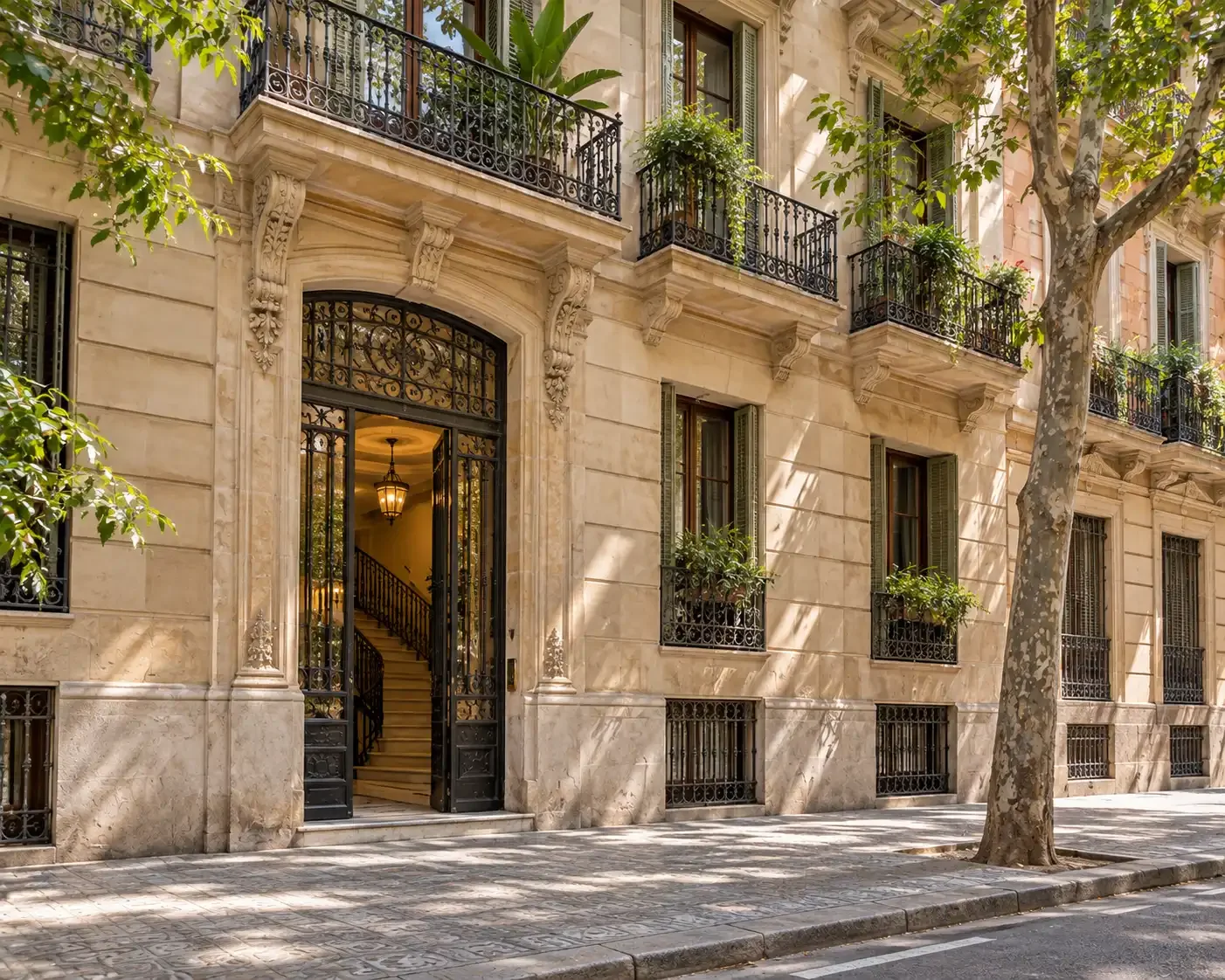
A beautifully renovated apartment can hide an ordinary building. That distinction matters more in Barcelona than almost anywhere else, because much of the city's housing stock dates from the late nineteenth and early twentieth centuries, and because of one structural fact of Spanish property law: when you buy a flat, you also buy a share of the building and a share of whatever the building needs next. The ITE, Catalonia's mandatory building inspection, and the community of owners' records are the two tools that tell you what that share is likely to cost. This guide explains how to check both before you commit, so that the building becomes part of your decision rather than a surprise after it.
What is the ITE and why does it matter when you buy?
The Inspección Técnica de Edificios (ITE) is a mandatory technical inspection of residential buildings in Catalonia, regulated by Decree 67/2015. A competent building professional carries out a visual inspection and reports on the building’s condition. Residential buildings must undergo their first inspection before reaching 45 years of age. A new inspection is required before the current certificado de aptitud expires; its validity depends on the findings.
For a buyer, the ITE matters for three reasons. First, it is the only systematic, legally required check on the parts of the building you cannot see from inside the flat you are viewing: the structure, the façade, the roof, the lift and the common installations. Second, the findings often translate directly into future costs, because the community of owners is obliged to carry out the works the report identifies. Third, it is a window into how the community actually manages the building: a clean, on-time certificate suggests an engaged owners' association, while a missed deadline or an expired certificate tells you something about how decisions get made or don't.
It is worth being clear about what the ITE is not. It is a visual inspection of common elements, not an investigation of hidden defects, and it says nothing about the condition of the individual flat you are buying. That is one reason why a renovated flat and a sound building are different questions, which we return to below.
How to check a building's ITE report and certificado de aptitud
Start with the seller and the property administrator. In Catalonia, the seller must provide the building’s certificado de aptitud and, when the building is required to undergo an ITE, a copy of the inspection report. Ask for both documents early and check the report date, certificate category, validity period and any required follow-up inspections.
The Generalitat’s enquiry route is not an unrestricted public search: official guidance says that the property owner, community president or an authorised representative can request the building’s status and must provide evidence of their interest. As a buyer, ask the seller to supply the documents and have your lawyer or agent coordinate any authorised enquiry as part of due diligence. You can also review the certificate and report with a qualified technical professional.
If the seller cannot provide a certificate for a building that should have been inspected, treat that as a due-diligence issue and ask for an explanation before proceeding. The inspection obligation belongs to the owners or the community, and an ITE does not become optional because no reminder was received. The cost and practical consequences of resolving outstanding obligations can affect the community and, after purchase, your budget.
Understanding the findings: what the ITE categories mean for your budget
The ITE report classifies each deficiency it finds by severity, and the certificate's validity depends on that classification. A certificate is not a guarantee that no work will be needed: read the report and any technical verification requirements alongside it.
| Deficiency level | What it means | Certificate outcome and validity | Buyer's practical reading |
|---|---|---|---|
| None | No deficiencies were recorded in the inspection report. | Suitable without deficiencies; valid for 10 years. | Still review the report, meeting minutes and maintenance history. |
| Light (lleus) | Deficiencies classified as light. | Suitable with light deficiencies; valid for 10 years. | Check whether routine maintenance or monitoring is recommended. |
| Important (importants) | Deficiencies classified as important. | Provisional suitability; technical verification reports every 2 years; valid for 6 years. | Ask what work is planned, when it may be needed and how the community expects to fund it. |
| Serious or very serious (greus / molt greus) | Deficiencies classified as serious or very serious. | With precautionary measures duly carried out: conditional suitability, annual or more frequent verification as required, valid for 3 years. Without the required measures: suitability is denied. | Obtain technical advice and written details of the measures, works, timetable and funding before making an offer. |
Note the asymmetry in that table: the certificate's validity is a countdown, not a verdict. A building with important deficiencies and a six-year certificate is telling you that a derrama, an extraordinary community charge, is probably coming during your ownership. That is not necessarily a reason to walk away; a well-run community with a funded plan and access to rehabilitation grants can be a better purchase than a neglected building with a clean but superficially recent certificate. It is, however, a reason to price the risk into your offer.
Beyond the ITE: facades, roofs, lifts and common installations
The ITE gives you the official picture; your own eyes and three questions give you the practical one. When you visit, look up as well as around. Façade cladding, render and balconies are the most common sources of major works in Barcelona's older blocks, and scaffolding on a neighbouring building is often a preview of yours. On the roof terrace, look for staining, makeshift repairs and ponding. In the stairwell, the lift's age and condition, and any notice about its replacement, is one of the single most expensive items a community faces. Ask, or have your agent ask: when was the lift last replaced? Has the community discussed façade, roof or plumbing works in recent meetings?
Then read the minutes. The actas (minutes) of the last two or three annual owners' meetings are one of the most informative documents a buyer can obtain, because they show not just approved works but proposed ones, disputes, insurance claims and the community's financial behaviour. A community that has debated a roof repair for three years without resolving it is telling you something the ITE certificate cannot.

What is a derrama, and who pays it after you buy?
A derrama is an extraordinary contribution charged by the community in addition to ordinary fees, often to finance a new lift, façade repairs, roof waterproofing or work to shared installations. In Catalonia, the owners’ meeting approves extraordinary and improvement works, their amount and the contributions used to fund them. The certificate of community debts must also state approved ordinary and extraordinary charges that have not yet fallen due.
For a Barcelona purchase, the applicable framework is Catalonia’s Book Five of the Civil Code, which regulates horizontal property. Under Article 553-5, the property itself is liable for unpaid ordinary or extraordinary community expenses and reserve-fund contributions corresponding to the due part of the current calendar year and the four immediately preceding calendar years. The seller must declare whether payments are up to date, disclose outstanding amounts and provide a debt certificate that also lists approved amounts not yet due. The parties can expressly waive the declaration and certificate, so do not agree to a waiver without legal advice.
Ask for the certificate early, not only on signing day, and ask the administrator which approved charges are already due, which remain outstanding and which are scheduled to fall due after completion. A sale contract can allocate costs between seller and buyer, but that arrangement should be written clearly and reviewed by your lawyer; it does not replace checking what the community has approved or what the certificate records.
For a simple illustration of apportionment, if a community approves €60,000 of works and a flat’s participation coefficient is 3%, the flat’s share would be €1,800, subject to valid community allocation rules and the exact terms of the resolution. The important point is to establish what has been approved, what is already due and what the purchase contract says about remaining amounts.
Documents to request from the seller and the administrator
No single list fits every building, but a well-prepared Barcelona purchase typically gathers: the ITE report and certificado de aptitud, with issue dates; the actas of the last two to three owners' meetings; the community's current budget and any recent increases; the certificate of community debts for the notary, including approved amounts not yet due; the nota simple, which confirms the seller's title and registered charges; the community statutes; and, where works are planned, estimates or subsidy applications. If the flat comes with a parking space or storage room, check that they appear correctly in the registry. If you are buying into a community with an administrator, a short written questionnaire to the administrator any approved works? any litigation? any owners in prolonged arrears? often surfaces more than any single document.
Does a renovated flat mean a sound building?
No, and this is one of the most common misreadings in the Barcelona market, where renovated apartments can sit in buildings whose common areas have not been updated for years. A renovation can improve what you own privately: layout, finishes, wiring and plumbing inside the flat, and sometimes windows. But it tells you little about the load-bearing structure, party walls, façade, roof, lift shaft or shared downpipes. These elements are maintained collectively and can require community decisions and funding. A fresh renovation can also affect how willing an owner is to contribute to a major community project. The ITE, meeting minutes and administrator’s answers help you understand the building; the flat’s own technical survey helps you understand the apartment. Check both separately. For context on the planning side, see our guide to renovation planning for older apartments in Barcelona.
How Casas con Cariño can help you read the building
Reading a building is a skill, and it is one of the quietest and most valuable parts of what we do at Casas con Cariño. During the search, we help you interpret what you are seeing: which building details deserve follow-up, what the certificate’s validity period means and which questions to put to the administrator. During due diligence, we coordinate with your lawyer to gather the ITE report, meeting minutes and debt certificate, and ask practical questions that documents alone may not answer. Our property management service can keep you informed about community decisions, approved works and maintenance after purchase, particularly if you will not live in Barcelona full-time. If the apartment also needs work, our services team can coordinate renovation planning with local professionals. We are not engineers, lawyers or tax advisers, and where a finding needs a specialist, we will tell you plainly and connect you with one. If you are beginning a search in Barcelona, start the conversation with us before you fall for a flat; the building deserves a look too.

Frequently asked questions
How do I find out if a building has passed its ITE?
Ask the seller or administrator for the ITE report and certificado de aptitud, then check the report date, certificate category, validity period and any required verification. The Generalitat says an owner, community president or authorised representative can request the building’s status through its enquiry route, with evidence of their interest. In a sale, the seller must provide the certificate and, where the building is required to undergo an ITE, a copy of the report.
Should I buy in a building with ITE deficiencies?
It can still be a reasonable purchase, but assess the type and severity of the findings, required follow-up, the community’s plan and likely cost. Ask for estimates and meeting minutes, and have a technical professional review serious findings. Do not treat a certificate category alone as a cost estimate or assume an extraordinary charge has already been approved.
Does the ITE cover the flat I'm buying?
No. The ITE is a visual inspection of the building at the time of the visit and does not seek hidden defects. It does not replace a technical survey of the individual flat. Arrange a separate inspection if you need an assessment of the apartment’s interior condition.
What exactly is a derrama?
A derrama is an extraordinary community contribution, separate from ordinary fees, used to fund works or other approved community expenses. Ask how it is allocated, what the community has approved, which payments are due and which remain pending. In Catalonia, the debt certificate must include approved amounts that have not yet fallen due.
How do I protect myself from the seller's community debts?
Obtain the Catalan certificate of community debts before signing, and review the minutes and administrator’s answers for approved works and pending contributions. Under Article 553-5 of the Catalan Civil Code, the property is liable for unpaid community expenses and reserve-fund contributions corresponding to the due part of the current calendar year and the four preceding calendar years; the seller remains responsible for the debt owed at transfer. Have your lawyer clearly record how the seller and buyer will allocate pending amounts.
Who pays for works the ITE orders?
The community must address its legal conservation and rehabilitation obligations, and owners contribute to common expenses under applicable community rules. The ITE report alone does not show each owner’s cost or payment date. Ask for the rehabilitation programme, meeting resolution, cost allocation, reserve position and any funding applications.