Buying Property in Barcelona: The Complete Guide for International Buyers (2026)

Last Updated: July 2026
Buying property in Barcelona is about much more than purchasing a home. For many international buyers, it represents a long-term investment, a second residence in Europe, a future retirement plan, or the beginning of a new life in Spain.
Over the past decade, Barcelona has become one of Europe's most attractive property markets for international buyers. People from across the UK, Northern Europe, North America, the Middle East and many other regions continue to choose the city for its quality of life, Mediterranean climate and resilient real estate market.
However, buying property in Spain is very different from buying property in many other countries.
Finding the right apartment is only one part of the journey.
The legal status of the property, building condition, ownership records, community regulations, taxes, renovation requirements and long-term property management all play a major role in determining whether your investment will be successful.
At Casas Con Cariño, we work with international homeowners every day, and we've noticed that most buyers ask the same questions before making their decision.
Can foreigners buy property in Barcelona?
Is buying property still a good investment after the end of the Golden Visa programme?
Which neighbourhoods offer the best long-term value?
How much should I budget beyond the purchase price?
Do I really need a lawyer?
How can I manage my property if I don't live in Spain?
Is it worth buying an older apartment and renovating it?
This guide was created to answer those questions and many more.
Rather than giving you a simple overview of the buying process, our goal is to help you understand what really matters before making one of the biggest investments you'll ever make.
Whether you're purchasing your first property in Spain, looking for a second home in Barcelona, or planning a future relocation, this guide will walk you through the buying process step by step while highlighting the most common risks, and how to avoid them.
Why Buy Property in Barcelona?
Spain offers many attractive locations for property buyers, including Madrid, Valencia, Málaga and Alicante. Yet Barcelona continues to be one of the country's most sought-after real estate markets.
The reason goes far beyond its beaches or famous architecture.
Barcelona combines an exceptional quality of life with long-term investment potential, making it one of Europe's most desirable cities for both homeowners and investors.
The city offers:
an international business environment,
world-class healthcare,
excellent public transport,
renowned universities,
a vibrant cultural scene,
and a Mediterranean lifestyle that attracts residents from around the world.
In recent years, the rise of remote working has also increased demand from international professionals looking for a permanent or seasonal home in Barcelona.
For buyers, this creates a healthy property market supported not only by tourism, but also by people who genuinely choose to live and work in the city.
Barcelona is also well connected to the rest of Europe and beyond, making it an ideal location for second-home owners who want easy access throughout the year.
That said, buying property in Barcelona isn't simply about choosing the city.
Each neighbourhood has its own character, price range, rental demand and long-term growth potential.
Choosing the right location is just as important as choosing the right property.
Can Foreigners Buy Property in Barcelona?
Yes.
Foreign nationals can legally buy residential or commercial property in Spain, regardless of whether they are residents.
Once you purchase a property, you become its legal owner and are free to live in it, rent it out, sell it or pass it on to your heirs, subject to Spanish law.
One of the most common misunderstandings concerns the difference between buying property and obtaining residency.
For several years, Spain offered residency through its Golden Visa programme for qualifying real estate investments.
Although the programme has now ended, this does not affect the right of foreigners to buy property in Spain.
International buyers can still purchase property in Barcelona exactly as before.
The end of the Golden Visa simply means that buying property no longer grants residency automatically.
Today, buyers are placing greater emphasis on factors such as:
location,
long-term capital appreciation,
rental potential,
building condition,
renovation opportunities,
and ease of managing the property from abroad.
These are ultimately the elements that determine whether a property becomes a successful long-term investment.
Who Is Buying Property in Barcelona Today?
The profile of international buyers has changed significantly over the past few years.
While investment remains an important motivation, today's buyers often have much broader goals.
Long-Term Investors
Many buyers are looking for a stable Euro-denominated asset with strong long-term growth potential.
Barcelona continues to attract investors who value capital appreciation alongside consistent rental demand.
Second-Home Owners
Some buyers spend only part of the year in Barcelona and want a comfortable home that can be professionally managed while they are away.
Remote Professionals and Digital Nomads
Barcelona has become one of Europe's preferred cities for professionals who can work from anywhere.
Its international community, infrastructure and lifestyle make it particularly attractive for location-independent professionals.
Families Planning a Relocation
International schools, healthcare and quality of life encourage many families to establish long-term roots in Barcelona.
Some purchase a property before relocating permanently, while others buy several years in advance.
Future Retirees
Many international buyers purchase property today with the intention of spending their retirement years in Barcelona later.
Owning a property in advance provides both financial security and future flexibility.
Every buyer has different priorities.
For some, rental yield is the primary objective.
For others, lifestyle, schools, architecture or proximity to the sea matter far more.
The most successful purchases begin not with finding the perfect apartment, but with understanding your own long-term objectives.
The Biggest Mistake Buyers Make Before Purchasing Property
Many people believe that finding the right apartment is the hardest part of buying property in Barcelona.
In reality, that's where the most important work begins.
A beautifully renovated apartment may still hide legal issues, outdated infrastructure, expensive building works or documentation problems that only become apparent after the purchase.
At Casas Con Cariño, we've seen situations where properties that initially appeared to be excellent opportunities required substantial additional investment once the full picture became clear.
This is why experienced buyers don't evaluate only the apartment itself.
They also assess:
the legal documentation,
the building's overall condition,
community finances,
future renovation plans,
maintenance responsibilities,
and any potential risks that could affect the property's value.
Successful property investment in Barcelona is often less about finding the perfect apartment and more about avoiding the wrong one.
That's why proper legal and technical due diligence is one of the most valuable investments you can make before signing a purchase agreement.
Step-by-Step: How the Property Buying Process Works in Barcelona
Buying property in Barcelona may seem complicated at first, especially if you're unfamiliar with the Spanish legal system. Compared to many other countries, the process involves additional legal checks, technical reviews and administrative procedures that can feel overwhelming for first-time international buyers.
The good news is that, when approached in the right order, the process is transparent, well regulated and relatively straightforward.
At Casas Con Cariño, we always tell our clients the same thing:
A successful property purchase isn't just about finding the right home, it's about following the right process.
Each stage plays an important role in protecting your investment and helping you avoid unnecessary risks later on.
1. Getting Your NIE Number
One of the very first steps for any foreign buyer is obtaining a NIE (Número de Identificación de Extranjero).
The NIE is your foreign identification number in Spain and is required for almost every legal and financial transaction related to purchasing property.
You'll need it for:
signing the purchase deed,
paying taxes,
opening a Spanish bank account,
registering utilities,
and many other official procedures.
Many buyers begin searching for properties before applying for their NIE.
While that's perfectly understandable, we generally recommend starting the NIE application as early as possible. Appointment availability can vary throughout the year, and obtaining your NIE in advance helps prevent unnecessary delays once you've found the right property.
2. Opening a Spanish Bank Account
Although it is not legally mandatory in every situation, having a Spanish bank account makes the purchasing process considerably easier.
Purchase deposits, completion payments, taxes, utility bills and ongoing property expenses are all much simpler to manage through a local account.
Depending on the bank, you may be asked to provide:
your passport,
NIE number,
proof of income,
tax documentation,
proof of address,
and occasionally evidence of the source of funds.
Requirements differ from one bank to another, so it's worth preparing these documents well before reaching the final stages of your purchase.
3. Finding the Right Property Is Only the Beginning
One of the biggest mistakes international buyers make is focusing exclusively on the apartment itself.
A newly renovated kitchen, beautiful flooring or stylish interior design can create a great first impression—but they don't tell the full story.
When you buy an apartment in Barcelona, you're also buying into the building.
That means you're becoming part of its shared ownership and accepting responsibility for elements such as:
the roof,
the façade,
structural components,
common areas,
lifts,
plumbing systems,
and the financial health of the owners' community.
This is particularly important in historic neighbourhoods such as Eixample, Gràcia, El Born and the Gothic Quarter, where many beautiful buildings are over a century old.
Character and charm often come with additional maintenance requirements.
During property purchases we've managed, we've encountered buildings where apparently minor issues later revealed:
ageing electrical installations,
outdated plumbing,
moisture problems,
poor insulation,
upcoming façade restoration,
roof replacement projects,
or lift modernisation works.
None of these necessarily make a property a bad investment.
The key is knowing about them before you buy, not afterwards.
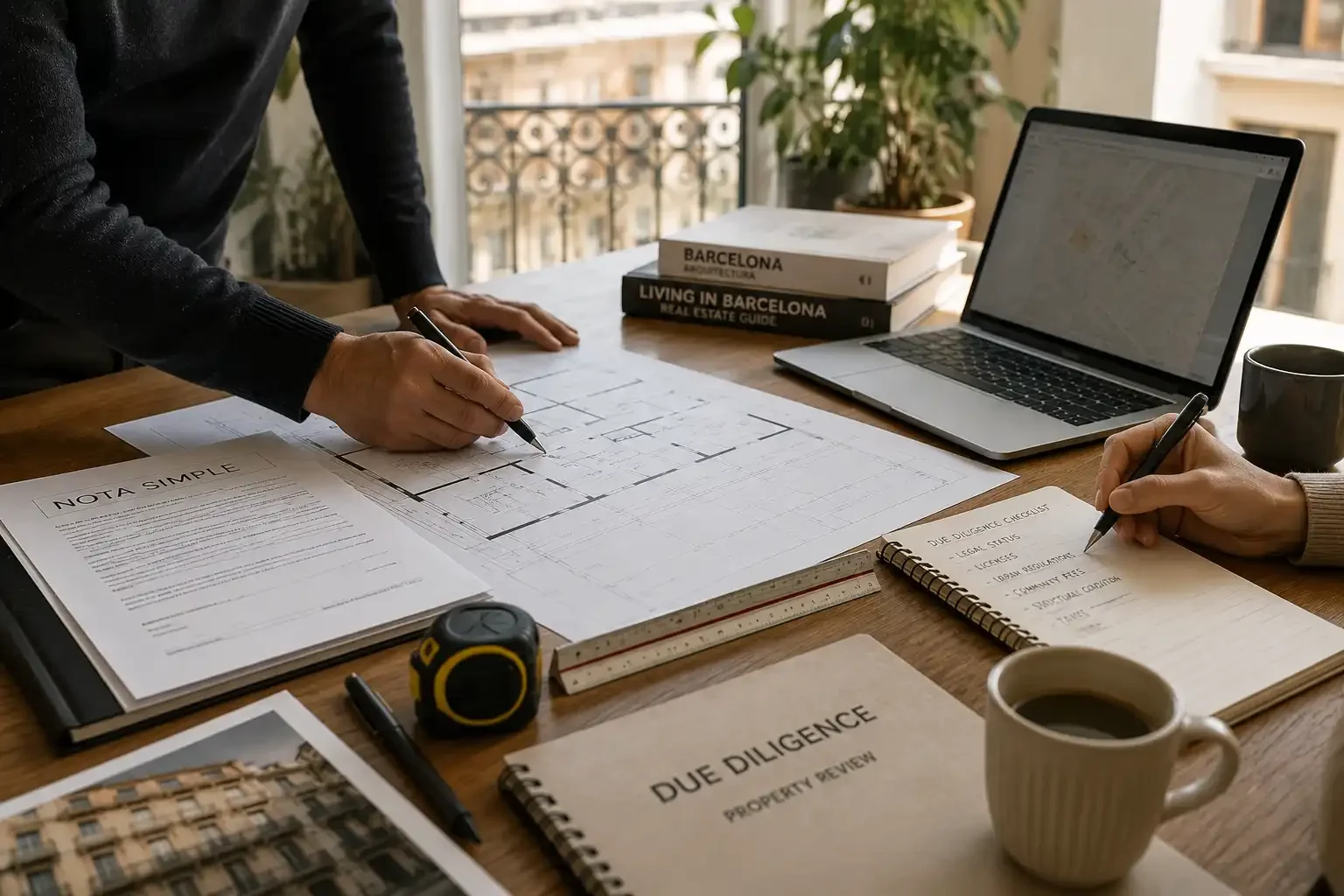
4. Due Diligence: The Most Important Stage of the Entire Purchase
If there is one part of the buying process that deserves the most attention, it's due diligence.
Many buyers assume the negotiation or signing at the notary is the most critical moment.
In reality, the decisions made before reaching the notary often have a much greater impact on the quality of your investment.
Due diligence is the process of thoroughly reviewing a property's legal, technical and administrative status before committing to the purchase.
Its purpose is simple:
Identify potential risks before they become expensive problems.
A proper due diligence process can reveal:
legal restrictions,
outstanding debts,
missing documentation,
unauthorised alterations,
significant future maintenance costs,
or structural concerns that may not be immediately visible.
This is why we consider due diligence one of the most valuable investments a buyer can make.
Reviewing the Nota Simple
One of the first legal documents reviewed during due diligence is the Nota Simple.
Issued by the Spanish Land Registry, it provides an official summary of the property's legal status.
It confirms important information such as:
registered ownership,
existing mortgages,
charges or liens,
easements,
and other legal rights affecting the property.
Simply receiving a Nota Simple isn't enough.
It needs to be carefully reviewed to ensure there are no legal issues that could affect your purchase or create future complications.
Checking the Cédula de Habitabilidad
Another key document is the Cédula de Habitabilidad, which certifies that the property is legally suitable for residential use.
This certificate may also be required when transferring certain utility contracts.
If it has expired or is missing entirely, it may involve additional administrative procedures after the purchase.
Confirming its status before completion helps avoid unnecessary surprises.
Energy Performance Certificate
Spanish law requires residential properties offered for sale to have a valid Energy Performance Certificate.
Beyond its legal requirement, this document can provide useful insight into:
insulation quality,
window performance,
energy efficiency,
and potential future renovation needs.
Older apartments often benefit significantly from energy improvements, making this information particularly valuable when planning future works.
Reviewing the Owners' Community
Every apartment building in Barcelona is managed through a Community of Property Owners (Comunidad de Propietarios).
Before purchasing, it's important to understand far more than the monthly community fee.
We recommend reviewing:
whether outstanding community debts exist,
the financial health of the community,
planned building works,
recent meeting minutes where available,
and any major renovation projects already approved.
For example, if the building has already voted to renovate the façade or replace the lift, future owners may be required to contribute significant additional costs.
Understanding these obligations before purchasing allows you to budget realistically.
Previous Renovations and Building Works
Many apartments in Barcelona have been renovated over the years.
However, not every renovation has necessarily been carried out with the appropriate permits.
Changes involving:
structural walls,
enclosed balconies,
attic conversions,
or major layout alterations
should always be reviewed carefully.
Verifying that previous works comply with local regulations helps reduce the risk of legal complications after the purchase.
5. Negotiating the Purchase
In many countries, negotiation focuses almost entirely on price.
In Barcelona, successful negotiation often goes much further.
Depending on the circumstances, negotiations may also include:
completion of outstanding repairs,
clarification of documentation,
inclusion of furniture or appliances,
agreed completion dates,
or other practical arrangements that improve the overall transaction.
A good negotiation doesn't simply reduce today's purchase price.
It also helps minimise tomorrow's risks.
6. Signing Before the Notary
Once all legal checks have been completed and both parties have reached an agreement, the transaction proceeds to the notary.
During this appointment, the Escritura Pública (public deed of sale) is signed, payment is completed and the legal transfer of ownership begins.
Many buyers assume that this marks the end of the process.
In reality, several important steps still follow.
These typically include:
registration with the Land Registry,
payment of applicable taxes,
transfer of utilities,
arranging property insurance,
and, where necessary, planning renovation works or ongoing property management.
Buying a property doesn't end when you receive the keys.
For many international homeowners, that's when the next chapter begins.
Key Takeaway
Buying property in Barcelona isn't simply about finding an apartment you love.
It's about making informed decisions throughout every stage of the purchasing process.
Proper legal checks, technical inspections, realistic budgeting and careful planning after completion are what ultimately protect your investment.
The most successful buyers aren't necessarily those who negotiate the lowest purchase price.
They're the ones who fully understand what they're buying before they sign.
The Real Cost of Buying Property: Budgeting Beyond the Purchase Price
One of the most common mistakes first-time international buyers make is planning their budget based solely on the asking price of the property.
In reality, the purchase price represents only part of the total investment.
Taxes, notary fees, Land Registry costs and other legal expenses all need to be factored into your budget before making an offer.
As a general guideline, buyers should expect additional acquisition costs of approximately 10–15% of the purchase price, although the exact figure depends on factors such as whether the property is new or resale, the financing method and your individual circumstances.
Typical purchase-related costs include:
Property transfer taxes or VAT (depending on the property)
Notary fees
Land Registry fees
Legal representation
Mortgage-related costs (if applicable)
Property surveys or technical inspections when required
Understanding the full financial picture before purchasing allows you to make better decisions and avoid unexpected expenses later in the process.
Ongoing Costs Every Property Owner Should Consider
Completing the purchase doesn't mean your financial planning ends there.
Owning property in Barcelona comes with ongoing responsibilities and recurring costs that should be considered from the beginning.
These may include:
Annual property tax (IBI)
Community fees (Comunidad de Propietarios)
Waste collection tax
Home insurance
Utility bills
Routine maintenance and repairs
The exact costs vary depending on the size of the property, the building itself and the services available within the community.
If you're planning to use the property only occasionally, it's particularly important to ensure these responsibilities continue to be managed while you're away.
Managing a Property from Abroad
Many international buyers don't live in Barcelona full-time.
Some visit only a few times each year.
Others purchase a second home for future retirement or as a long-term investment while continuing to live in another country.
This naturally raises an important question:
Who looks after the property when you're not there?
It's a question many buyers don't fully consider until after completion.
In reality, even an empty property requires regular attention.
Unexpected situations can arise at any time, including:
water leaks,
electrical faults,
air-conditioning failures,
insurance inspections,
deliveries,
maintenance appointments,
or urgent requests from the building's community manager.
Over the years, we've learned that the biggest problems often begin as very small ones.
A minor leak detected quickly might require a simple repair.
The same leak left unnoticed for several weeks can result in significant water damage, expensive renovations and insurance claims.
Professional property management isn't simply about responding when something goes wrong.
It's about reducing the likelihood of problems happening in the first place.
Regular inspections, preventive maintenance, trusted contractors and local coordination help protect both your property and your investment while giving you complete peace of mind.
For homeowners who spend much of the year outside Spain, having a reliable local team can make all the difference.
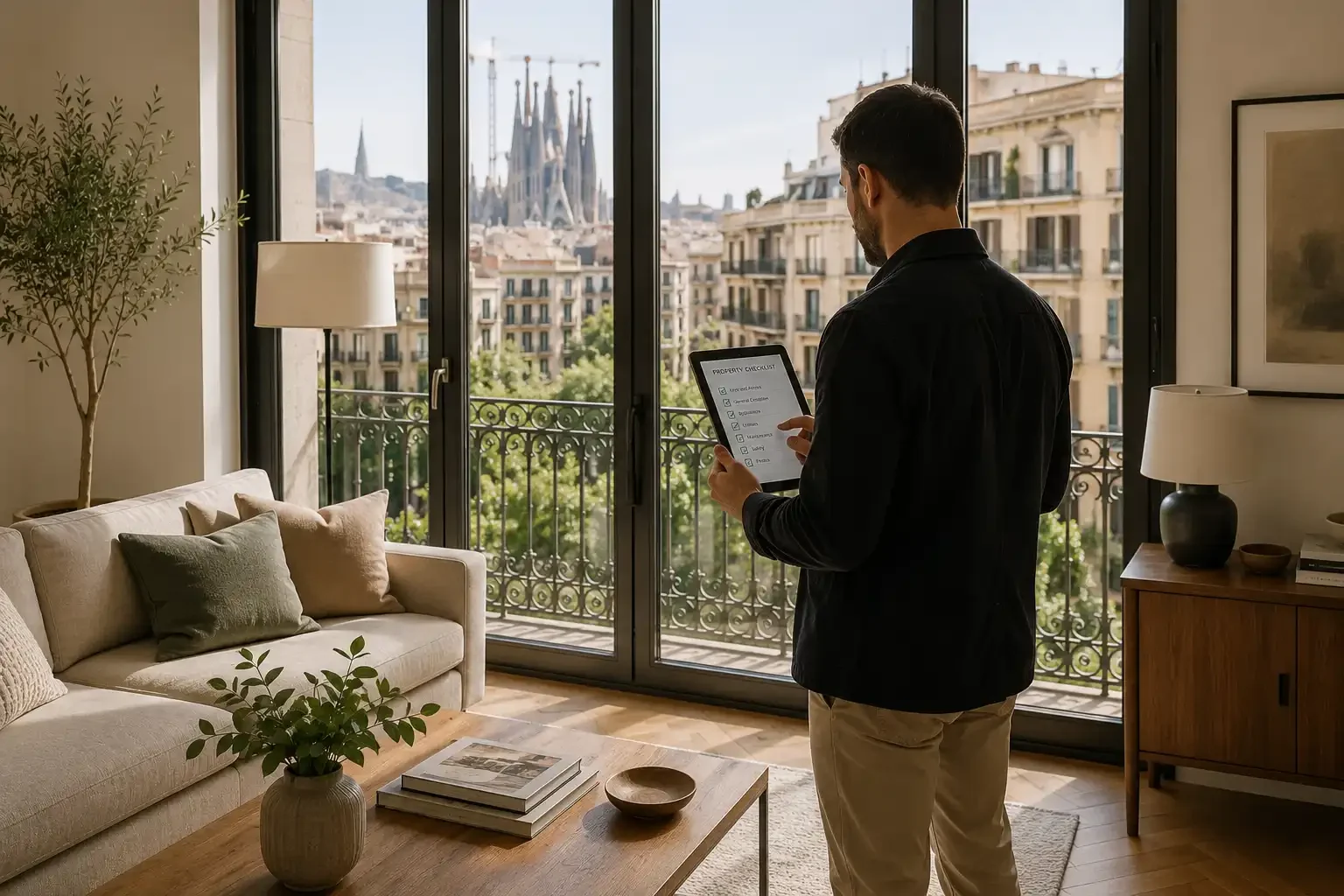
Is Buying an Older Apartment and Renovating It Worth It?
One of Barcelona's greatest attractions is its architecture.
Elegant period buildings, high ceilings, original hydraulic tiles and beautiful modernist details make many older apartments truly unique.
Neighbourhoods such as Eixample, Gràcia and parts of Ciutat Vella offer properties full of character that simply can't be replicated in newer developments.
Many of these homes, however, require renovation.
That shouldn't necessarily discourage buyers.
When planned properly, renovation can become one of the strongest ways to increase both comfort and long-term property value.
A successful renovation can:
improve energy efficiency,
modernise outdated infrastructure,
optimise the layout,
increase resale value,
and create a home better suited to your lifestyle.
But renovation is about much more than choosing finishes.
Before starting any project, it's important to understand:
whether permits are required,
the condition of the electrical and plumbing systems,
whether structural work is involved,
realistic budgets,
realistic timelines,
and the practical challenges of coordinating contractors.
For overseas homeowners, managing a renovation remotely can quickly become one of the most demanding aspects of property ownership.
Coordinating architects, contractors, suppliers and building administrators from another country requires time, local knowledge and constant communication.
A well-managed renovation doesn't simply improve the apartment—it protects your investment.
Planning to Rent Out Your Property?
Many international buyers don't intend to occupy their Barcelona property all year round.
Renting it out can be an effective way to generate income while helping offset ongoing ownership costs.
However, your rental strategy should ideally be considered before purchasing the property, not afterwards.
Different neighbourhoods attract different tenant profiles.
Different buildings have different regulations.
And not every property is suitable for every rental model.
Generally speaking, buyers consider two main options.
Long-Term Rentals
Long-term rentals typically provide more stable income and involve fewer day-to-day operational demands.
With careful tenant selection and professional management, they can become a reliable long-term investment.
Short-Term Tourist Rentals
Short-term tourist rentals in Barcelona are subject to strict licensing requirements and local regulations.
Not every property qualifies.
Assuming a property can automatically be used as a holiday rental can lead to unrealistic financial expectations.
Understanding these regulations before purchasing is essential when evaluating any investment opportunity.
Final Thoughts
Buying property in Barcelona is about far more than completing a real estate transaction.
It's a long-term financial and lifestyle decision.
Choosing the right location, carrying out proper legal and technical checks, understanding the true cost of ownership and planning how the property will be managed afterwards all play a crucial role in the success of your investment.
At Casas Con Cariño, we believe our role goes beyond helping clients purchase a property.
We aim to become a trusted local partner throughout your journey as a homeowner in Barcelona.
From pre-purchase guidance and renovation management to ongoing property management and relocation support, we help international homeowners navigate every stage with confidence.
The better informed you are before buying, the stronger your investment will be for years to come.
Frequently Asked Questions
Can foreigners legally buy property in Barcelona?
Yes. Foreign nationals can legally purchase residential and commercial property in Spain without being Spanish residents.
Does the end of the Golden Visa programme affect property purchases?
No. The end of the Golden Visa programme only affects residency through property investment. It does not affect your legal right to purchase property in Spain.
Do I need to live in Spain to buy property?
No. You can purchase property as a non-resident, provided you complete the necessary legal and administrative requirements.
Can foreigners get a mortgage in Spain?
Yes. Many Spanish banks offer mortgages to non-resident buyers, subject to their lending criteria and financial assessment.
Is buying an older apartment a good investment?
It can be, provided the property undergoes proper legal and technical due diligence before purchase and any renovation work is carefully planned.
Can I manage my Barcelona property while living abroad?
Yes. Many international homeowners successfully manage their properties remotely with the support of professional local property management services.
How long does the buying process usually take?
The timeframe varies depending on the property and documentation, but most purchases are completed within several weeks to a few months.
Do I need a lawyer when buying property in Spain?
Although not legally mandatory in every case, independent legal advice is strongly recommended for international buyers to ensure the purchase proceeds safely.
What budget should I realistically plan for?
In addition to the purchase price, buyers should budget for taxes, legal fees, notary costs, registration fees and any renovation or furnishing costs where applicable.
Looking for a Trusted Local Partner in Barcelona?
Buying property in Barcelona involves much more than finding the right apartment. From legal and technical due diligence to renovation management, ongoing property care and relocation support, every stage benefits from experienced local guidance.
At Casas Con Cariño, we help international buyers purchase, renovate and manage their properties with confidence. Whether you're investing in your first home in Barcelona or looking after an existing property from abroad, our team is here to support you every step of the way.
Explore our;