Renovating and Furnishing an Apartment in Barcelona: From Empty Property to Move-In Ready Home
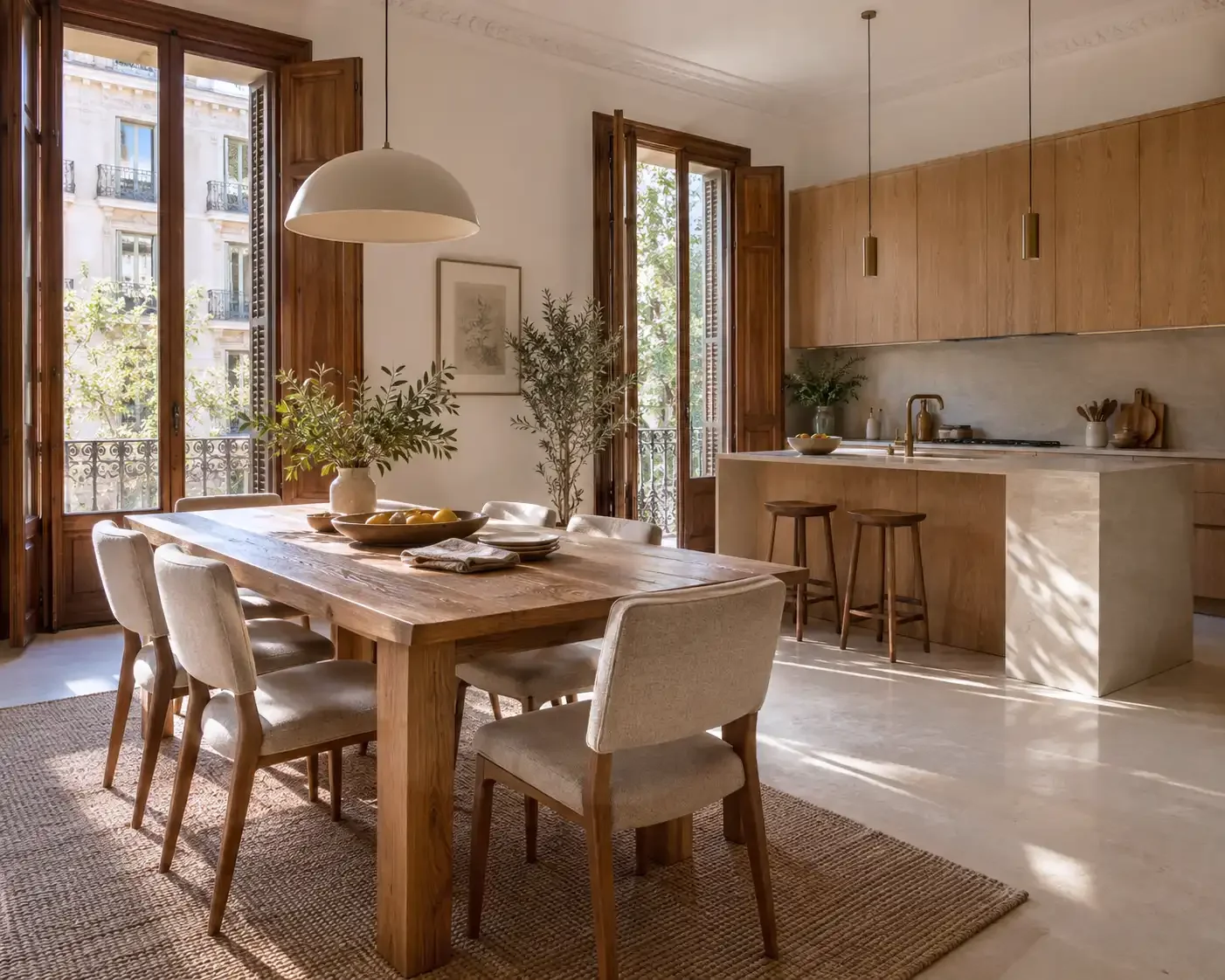
You have completed the purchase of the apartment, the notary has signed, the keys are yours, and the rooms are echoing and empty. For many international owners, this is the moment the real work begins, and the question arrives quickly: where do I start? The honest answer is that renovation, interior design and furnishing are not three separate projects but one continuous process, and the order in which you make decisions matters as much as the decisions themselves. Choices made casually at the furnishing stage can undo careful renovation work; choices made early at the design stage can save high costs and months of drift. This guide walks through the process as a single journey, from the first walkthrough to the day the apartment is genuinely ready to live in.
Start with the end: how will the apartment be used?
Everything downstream of this question depends on its answer, so it is worth answering honestly before anyone picks up a paint chart. An apartment for your own full-time living can absorb personal taste, ambitious layouts and higher-end finishes because you are the one who will enjoy them daily. A second home you visit a few times a year has different priorities: everything must be easy to shut down and reopen, robust enough to sit unattended, and simple enough to maintain from a distance. An apartment prepared for the rental market pushes toward durability, neutral palettes, hard-wearing surfaces and storage that survives unfamiliar users’ choices that protect your investment rather than express your personality.
This is also the moment to separate what the apartment needs from what you want it to be. Walk through every room and sort what you see into three lists: things that must be fixed for the home to function properly (plumbing leaks, unsafe wiring, damp, broken windows), things that would meaningfully improve daily life (a better kitchen, a second bathroom, proper heating), and things that are purely cosmetic (paint, finishes, styling). The first list is not negotiable; the second is where your budget will do its hardest work; the third should wait until the other two are settled.
Renovation first, decoration second: defining the scope
A useful rule separates decoration from renovation. Decoration changes what things look like; renovation changes how the apartment works. Painting walls, laying new flooring over sound substrates, replacing doors, updating light fittings and installing a new kitchen or bathroom "in the same place" are at the lighter end, in Barcelona, the applicable procedure depends on the exact work and property, and some like-for-like work may fall under a simple notification. Moving walls, redistributing rooms, replacing the electrical installation wholesale, re-plumbing, or touching anything structural is a different category entirely, one that can involve a technician's project and the appropriate licence or prior communication, because in older Barcelona buildings many internal walls are load-bearing in ways a quick visit cannot reveal.
The practical implication for sequencing is simple: settle the scope of the renovation, down to which walls move and where the wiring runs, before falling in love with furniture. A sofa bought early becomes an obstacle to every decision that follows, while a floor plan decided early lets the electrician, the plumber and the joiner work from the same sheet.
Do you need an architect, and what permits apply in Barcelona?
Spanish and Catalan regulations tie the level of technical supervision to the level of intervention, not to the size of your budget. Barcelona uses different procedures for works, including the Enterado (Assabentat) regime, prior communications and works licences; the right route depends on the work and the property. Under the Enterado procedure, the works may start once the filing has been admitted; other procedures have their own requirements and start conditions. Interior redistributions and installation renewals may require technical documentation, while more significant interventions can require a full minor or major works licence and a technical project. Structural work, façade changes, protected buildings and changes of use need particular care, so confirm the applicable route before work begins.
Rather than guessing where your project falls, Barcelona offers a useful first step: the municipal Consulta Previa (prior enquiry), which uses the property's cadastral reference to identify the applicable procedure and is valid for six months. Two other checks belong at this stage. First, the money: licensing carries municipal fees and, in Barcelona, the ICIO construction tax, which is currently 4% of the material execution cost of the works, so it belongs in the budget from day one rather than as a surprise line later. Second, heritage: some Barcelona buildings are protected, and the applicable protections can restrict changes to original features or other elements. If your building is catalogued, involve someone who has worked within that framework before design starts, adapting a design to satisfy heritage constraints afterwards can be slow and expensive.
Space planning: layout, storage, light and daily life
Barcelona's classic housing stock has strong bones and characteristic constraints: the long, narrow "corridor" flats of the Eixample, interior bedrooms that rely on borrowed light, high ceilings that are an asset if used well and a liability if ignored. Good space planning here is less about square metres and more about circulation, light and storage. Before any finishes are chosen, answer the daily-life questions on paper. Where does the morning light fall, and which room should the kitchen open to? Can the interior bathroom borrow light and ventilation through a courtyard-facing window or a glazed partition? Where does the washing machine, the coats, the suitcases and the vacuum cleaner actually live? In apartments without generous storage, built-in joinery along corridors, over doorways and into alcoves often delivers more usable value per euro than any other single intervention.
Lighting deserves equal attention, because Barcelona winters reward layered light: general ambient lighting, task lighting over kitchen counters and desks, and warmer accent light in living and sleeping areas. Deciding lighting positions belongs to the renovation phase, not the furnishing phase, chasing a cable through a freshly painted ceiling is the kind of regret this process exists to prevent.
Budget as one picture, not three separate ones
The most common budgeting error in renovation projects is treating construction, design, furniture and appliances as separate pots and discovering, halfway through, that they draw on the same money. A sound budget is a single document with clear categories: technical fees and permits; construction works; kitchens and bathrooms as the works' centrepiece; flooring, doors and joinery; furniture; appliances; textiles and decoration; delivery, assembly and installation; and a contingency reserve for what the walls reveal once they are opened. The size of that reserve should reflect the age and condition of the building rather than optimism, older Barcelona apartments can conceal wiring, plumbing and damp that no viewing can detect, and the contingency is what keeps those discoveries as adjustments rather than crises.
When comparing contractor quotes, ask for itemised, like-for-like breakdowns and check that each includes the same scope, the same quality level of materials, and waste removal. A quote that is cheap because it excludes plumbing, or because it assumes you will supply the tiles, is not cheaper; it is later. Resist any pressure to commit the whole budget at once: the sequence below lets you hold furniture decisions until the space exists to measure them against.
Keeping Barcelona's character while living modern
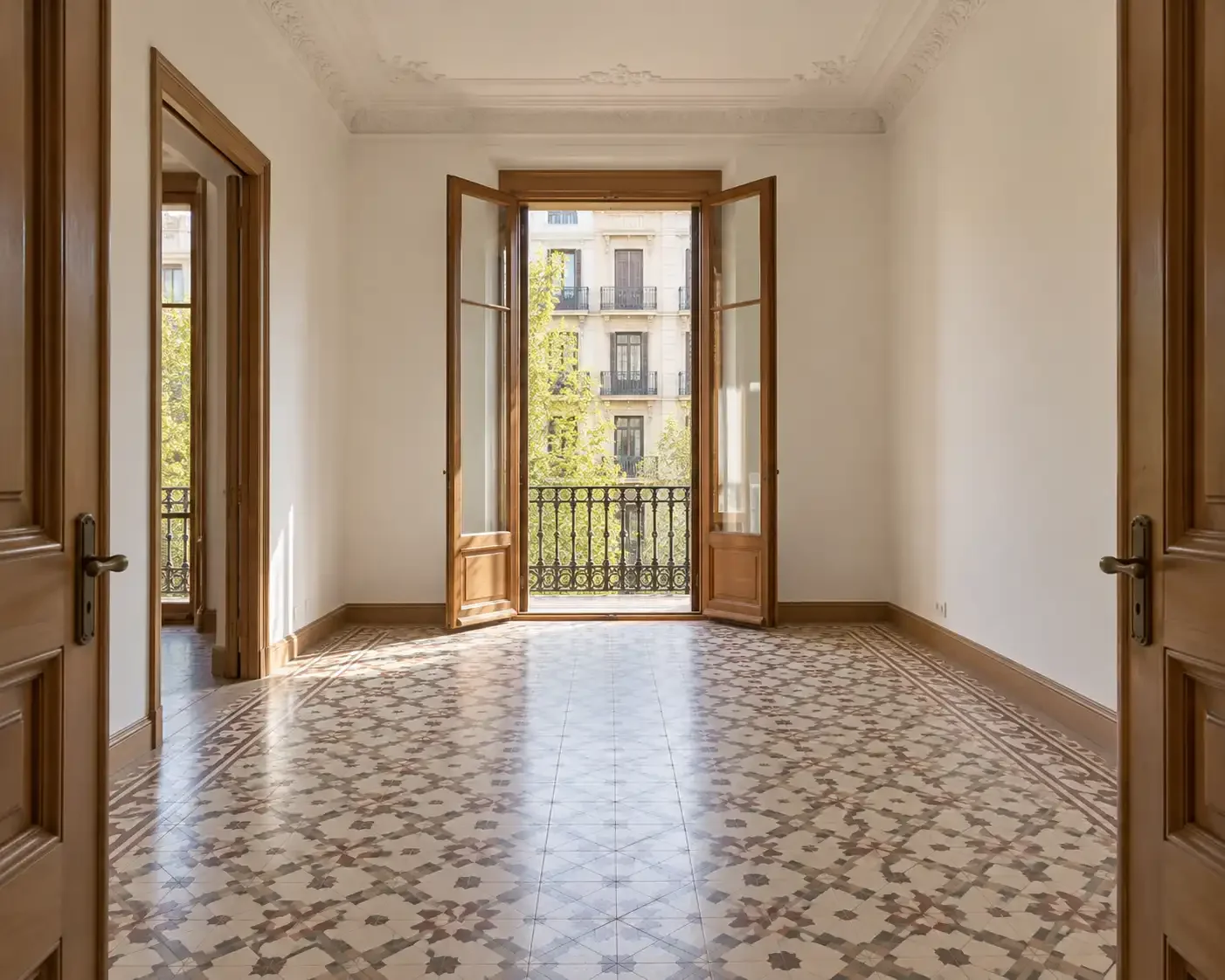
One of the privileges of owning in this city is what already exists inside the apartment: hydraulic cement tiles with a century of patina, three-metre ceilings with moulded cornices, panelled doors, window joinery in old timber, mosaic floors the colour of the Mediterranean. The modern instinct to strip everything back to white is understandable and usually a mistake. Original features are not obstacles to contemporary living; properly restored, they are what separates a Barcelona apartment from an interchangeable new-build anywhere in the world — and, pragmatically, what future buyers and tenants may value.
The contemporary half of the equation is about letting those features breathe. Restoration of hydraulic floors and joinery, honest materials, a restrained palette that puts the architecture first, and modern comfort (proper insulation where possible, efficient heating and cooling, good lighting) engineered quietly around the period shell. Where the building is protected, this balance may also be shaped by the applicable conservation requirements. A designer experienced with Barcelona's housing stock will know which battles to fight and which original elements to celebrate.
Furnishing and the final stretch: from worksite to home
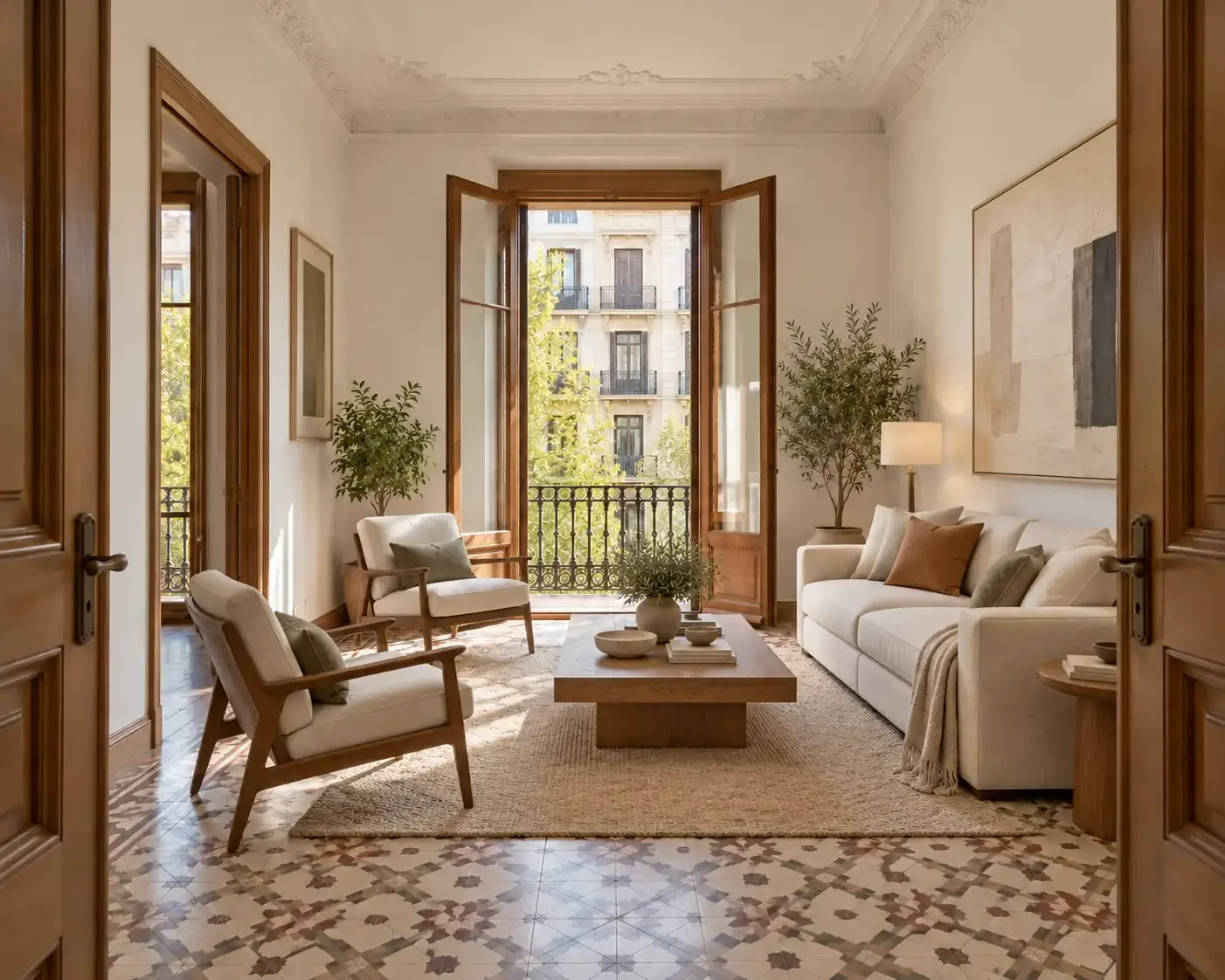
Furnishing begins long before the works end, and its critical discipline is sequencing. The moment the layout is fixed, walls finalised, sockets positioned, floors chosen, take precise measurements and begin the furniture plan. Order long-lead items (bespoke joinery, sofas, beds made to size) so their production overlaps with construction, while scheduling delivery only once floors are finished and the space is protected. A mattress arriving mid-works is a storage problem; a sofa arriving two weeks after handover is a home.
The last phase is shorter than people expect and easier to underestimate: final deep clean; curtain rails and curtains (a surprisingly consequential line, in Barcelona's light and summer heat, they are climate control as much as decoration); the arrival and assembly of remaining furniture; artwork hung; beds made; the first grocery run and a working kettle. "Move-in ready" should be defined precisely in advance with whoever runs the project, because it means different things to different people. A useful checklist covers: all works complete and signed off, all furniture delivered and assembled, appliances installed and tested, curtains and lighting functional, a documented snag list of small defects scheduled for correction, and the keys, plus the access codes, the manuals and the supplier contacts, in your hand or your manager's.
Managing the whole process from abroad
Most of what the previous paragraphs describe can be decided from anywhere; what cannot be done remotely is presence. Someone must be there to let the surveyor in, to check the delivered tiles against the approved sample, to notice that the wall the plan assumed was hollow is not, to receive deliveries, to hold keys, to chase the installer who did not come. This is precisely where many international owners lose months: not to major problems, but to a hundred small absences.
A well-run remote process replaces presence with rhythm: a fixed weekly written update with photographs, decisions presented as clear options with costs and consequences rather than open questions, a shared document where selections, measurements and approvals live, and a named person on the ground empowered to solve the small things and escalate the big ones. Video calls work well for almost every design decision once the options are on the table; what they cannot replace is someone trustworthy standing in the room. That gap is exactly what a local coordination service exists to fill.
How Casas con Cariño can take you from empty keys to a lived-in home
This is the process our renovation and interior design team runs for international owners in Barcelona, as one continuous engagement rather than a chain of contractors. We begin with the walkthrough and the use question, help you define scope and priorities realistically against the building's condition, and coordinate the technical professionals, surveyors, architects and licence managers that the scope requires. Our design and architecture team develops the space plan, lighting and joinery, working with the apartment's original features rather than against them, and we tender the works to trusted contractors with itemised comparisons you can evaluate from abroad. During construction we hold the keys, supervise, and report on a fixed rhythm; during furnishing we manage measurements, orders, deliveries and assembly, and we define "move-in ready" with you as a written checklist, not a hope. Once you are living in or renting the apartment, our property management service continues the same relationship: maintenance, community matters, inspections and the quiet reassurance that someone capable is nearby. We are not architects, lawyers or tax advisers, and where your project needs one we will say so and connect you; what we do is make the whole journey coherent, so that the apartment you imagined is the apartment you walk into.
Frequently asked questions
I just bought an empty apartment in Barcelona. What is the very first step?
Walk it with someone experienced and sort everything you see into "must fix", "would improve daily life" and "cosmetic only". Then answer the use question, your home, second home or rental, because it determines scope, finishes and budget. Design and furniture decisions come after that, not before.
Do I need an architect for my renovation?
It depends on scope. Some painting, flooring and like-for-like replacements may proceed under a simple notification in Barcelona, but the procedure depends on the specific work and property. Room redistribution, major installation renewals and structural work may require technical documentation and a licence or prior communication. The municipal Consulta Previa helps identify which procedure applies to your project.
How long does the whole process take?
Honest answer: it depends on scope, building and licence route, and anyone who quotes you a single number before surveying is guessing. As broad orientation, decoration-led projects run in weeks, while full renovations with design, permitting, construction and furnishing typically run in months, and the licence route chosen at the start is one of the biggest variables. Build the timeline from a real survey, not from optimism.
Can I keep the original features and still have a modern apartment?
Yes, that combination is the best of what Barcelona offers. Restored hydraulic floors, high ceilings, cornices and joinery paired with efficient heating, good lighting and contemporary bathrooms is not a compromise but a signature. If the building has heritage protection, some elements may need to be conserved under the applicable rules; a designer experienced with protected buildings will treat that as a design asset, not just a constraint.
Should I order furniture before the renovation is finished?
Order early, deliver late. Begin the furniture plan as soon as the layout is fixed, place long-lead orders so production overlaps with construction, and schedule deliveries only once floors and finishes are complete and protected. This avoids both storage problems and empty rooms.
Can the entire process be managed while I live abroad?
Yes, provided there is a trusted person on the ground. Decisions, approvals and design reviews all work remotely with a fixed reporting rhythm and a shared selections document. What requires local presence, access, deliveries, quality checks, problem-solving, is exactly what a local coordination service provides.
What does "move-in ready" actually include?
Define it in writing before the project starts. At minimum: works completed and signed off, furniture delivered and assembled, appliances installed and tested, curtains and lighting working, a documented snag list with correction dates, and full handover of keys, codes, manuals and supplier contacts. Anything less is "nearly finished".