What Tenants Actually Pay More For in Barcelona Rentals (2026)
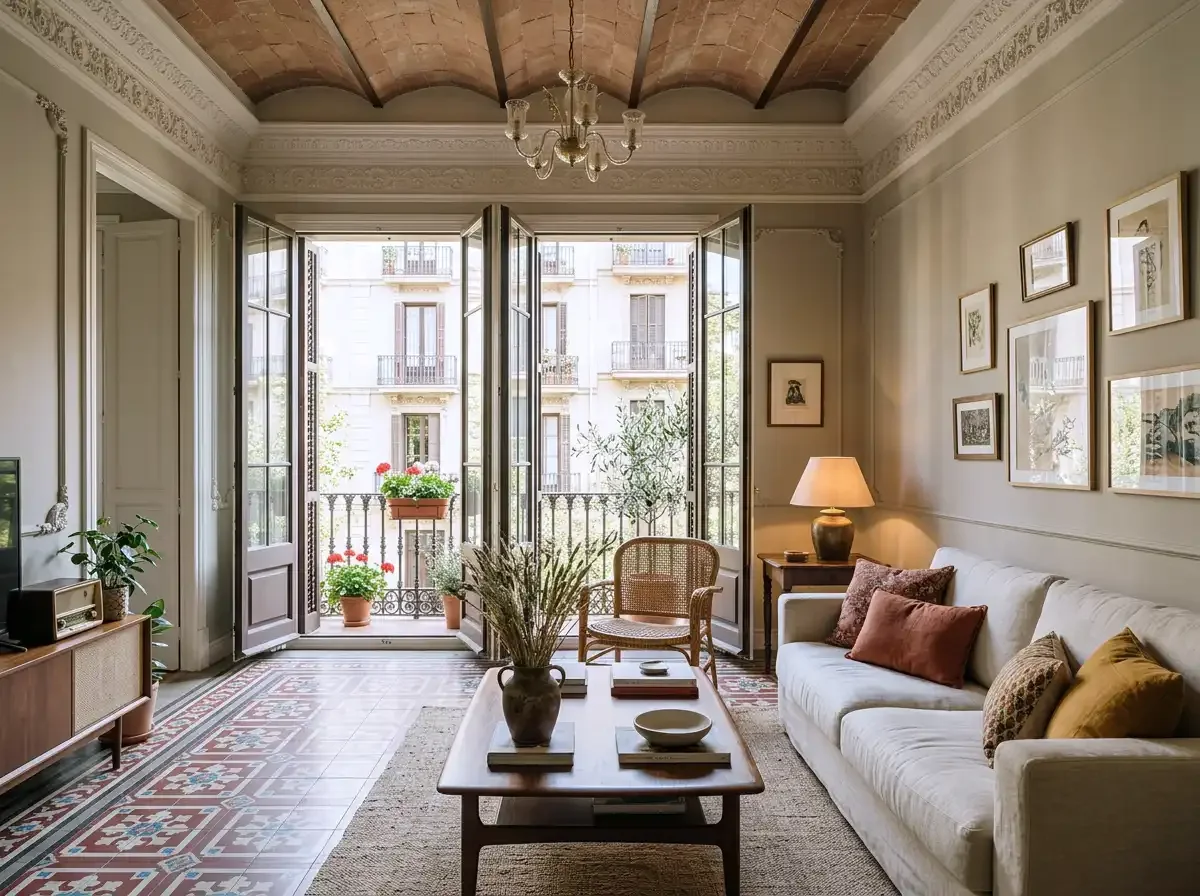
How the right design choices turn a vacant Barcelona apartment into a home tenants fight to keep and pay a premium for.
Barcelona's rental market has shifted. The era of simply listing a flat and waiting for inquiries is over. Today's tenants, remote workers, relocating families and digital nomads with steady incomes are discerning. They have options. And they are willing to pay more, but only for spaces that feel intentional, livable, and quietly generous.
At CASAS CON CARIÑO, we have spent years managing properties across Eixample, Gràcia, Sant Antoni, and the Gothic Quarter. We do not observe the market from a distance. We walk into dozens of apartments every month. We meet tenants at viewings. We hear what they whisper to each other in the hallway. We see what makes someone pause at the doorway and exhale. We also see what makes them turn around before they reach the kitchen.
This guide is not about luxury finishes or passing trends. It is about the five design elements that, based on patterns we have observed across the properties we manage, genuinely increase rental yield, reduce vacancy periods, and build the kind of tenant loyalty that protects your investment over the long term.
1 Storage: The Silent Deal-Breaker
If there is one truth we have learned after years of hands-on property management in Barcelona, it is this: tenants will forgive a small bathroom. They will forgive an older kitchen. But they will not forgive a flat with nowhere to put their belongings. Storage is not a luxury; it is a necessity, and its absence is the single most common reason a prospective tenant walks away.
Barcelona's classic apartments, particularly in Eixample, average between 60 and 85 square metres. Many were built in the late 19th and early 20th centuries, when storage was an afterthought. A single freestanding wardrobe in the master bedroom is no longer enough. The modern tenant arrives with luggage, work equipment, sports gear, and the expectation of living fully within the space they rent.
What Tenants Actually Look For
Built-in wardrobes in every bedroom, floor-to-ceiling, with shelving and hanging space. A shallow 40-centimetre depth is sufficient if designed well.
Entryway storage includes a bench with drawers, wall hooks and a shoe cabinet. The first thirty seconds inside a flat set the emotional tone. Clutter at the door kills it.
Bathroom shelving behind mirrors, above doors, or recessed into walls. Counter space is minimal in most Barcelona bathrooms; vertical storage compensates.
Kitchen pantry space, even if compact. A pull-out larder unit or deep drawers for dry goods make a kitchen feel generous.
If you're planning to improve your property before renting it out, you may also find our guide on whether it's worth renovating your apartment before renting it out in Barcelona helpful.
Property Manager's Insight: Within our managed portfolio, flats with comprehensive built-in storage tend to rent noticeably faster and achieve higher monthly rents than comparable properties without it. The investment is modest, typically €2,000–€4,000 for a two-bedroom flat and, in our experience, pays for itself within the first year through reduced vacancy and stronger tenant retention.
The emotional logic is simple. When a tenant opens a wardrobe and sees space for everything they own, they feel settled. They picture themselves living there for years, not months. That feeling is worth paying extra for and it is worth designing for.
2 A Dedicated Work Space: No Longer Optional
The Barcelona tenant of 2026 is not the tourist of 2019. Remote work has redefined what people need from a rental home. A dining table that doubles as a desk is no longer acceptable for the long-term tenant. They need a defined work area not necessarily a separate room, but a deliberate zone with good light, a proper surface, and enough quiet to take a video call without apologising.
The Economics of the Work Corner
Barcelona has become a magnet for remote workers from Northern Europe, the United States, and Latin America. These tenants earn in stronger currencies and stay longer, often twelve to twenty-four months. They are the ideal tenant profile: stable income, low turnover, respectful of property. But they will not compromise on the workspace.
We have observed a clear pattern in the properties we manage. Flats with a dedicated desk area near a window, even a small console table of 120 by 50 centimetres, tend to achieve a meaningful rental premium compared to identical flats without one. Over a twelve-month lease, that difference adds up. What is the cost of installing a simple built-in desk and shelving? Under €400.
Design Principles That Matter
Natural light is non-negotiable. A desk facing a wall under artificial light feels like a punishment. A desk beside a window, with a view of Barcelona's rooftops or a courtyard garden, feels like a privilege.
Cable management matters. Visible extension cords and tangled chargers signal neglect. A single power outlet with USB ports, positioned at desk height, sends a message of thoughtfulness.
Comfort without bulk. An ergonomic chair is ideal, but even a well-designed dining chair with proper back support suffices. The key is that the tenant does not need to buy furniture to make the space functional.
Key Takeaway: In Barcelona's mid-term rental market (3–12 months), a functional workspace is now the second most requested feature after air conditioning. If your flat lacks one, you are not just missing a design opportunity; you are missing a tenant segment entirely.
3 The Kitchen-Living Flow: Where Life Actually Happens
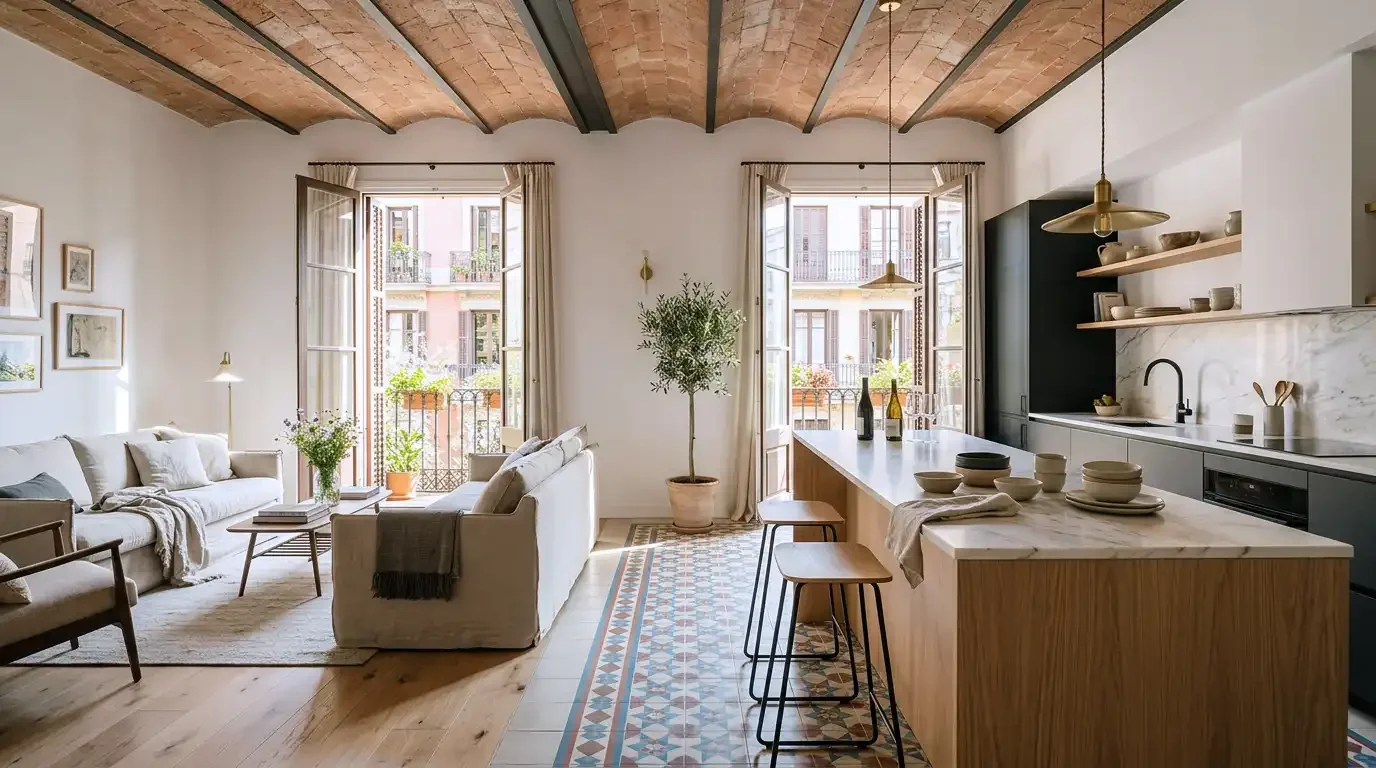
Barcelona's traditional apartments were built with closed kitchens, small separate rooms at the back of the flat, often with a single window facing an interior courtyard. This layout made sense a century ago. It makes none today. The modern tenant cooks, entertains, and lives in open, connected spaces. A closed kitchen in a 70-square-metre flat feels like a corridor. An open kitchen-living area feels like a home.
Why the Flow Affects Rental Income
Tenants in Barcelona, particularly expats, use their flats socially. They host friends for dinner. They work from the sofa with the smell of coffee from the kitchen. They want to see their partner cooking while they answer emails at the dining table. This is not about trendiness. It is about how people actually inhabit space.
In our experience managing homes across Barcelona, flats with an open-plan kitchen and living area consistently achieve longer tenancies. We have seen lease lengths extend significantly when tenants feel the flat adapts to their daily rhythm rather than fighting against it. Longer tenancies mean lower void periods, lower re-letting costs, and more predictable cash flow.
Practical Renovation Notes
Non-structural walls between the kitchen and the living room can often be removed without building permission, provided they are not load-bearing and do not contain utilities. Always verify with the building's comunidad and a technical architect first.
An island or peninsula defines the kitchen zone without closing it off. Even 120 centimetres of counter with bar stools creates a social anchor.
Consistent flooring between the kitchen and the living areas visually expands the space. Barcelona's original hydraulic tiles can be complemented with modern porcelain in matching tones rather than replaced entirely.
The investment in opening a kitchen typically ranges from €5,000 to €12,000, depending on plumbing relocation and electrical work. In a rental context, this investment is usually recovered within eighteen to twenty-four months through higher rents and reduced vacancy. But more importantly, it changes who wants to live in your flat and for how long.
4 Light and Outdoor Space: The Barcelona Premium
Barcelona is a city of light. The Mediterranean sun, the wide Eixample avenues, the narrow Gothic streets where light filters between ancient walls, light is not merely aesthetic here. It is emotional currency. Tenants do not just want a bright flat. They want to feel the city through their windows.
Balkons: The Four-Square-Metre Game-Changer
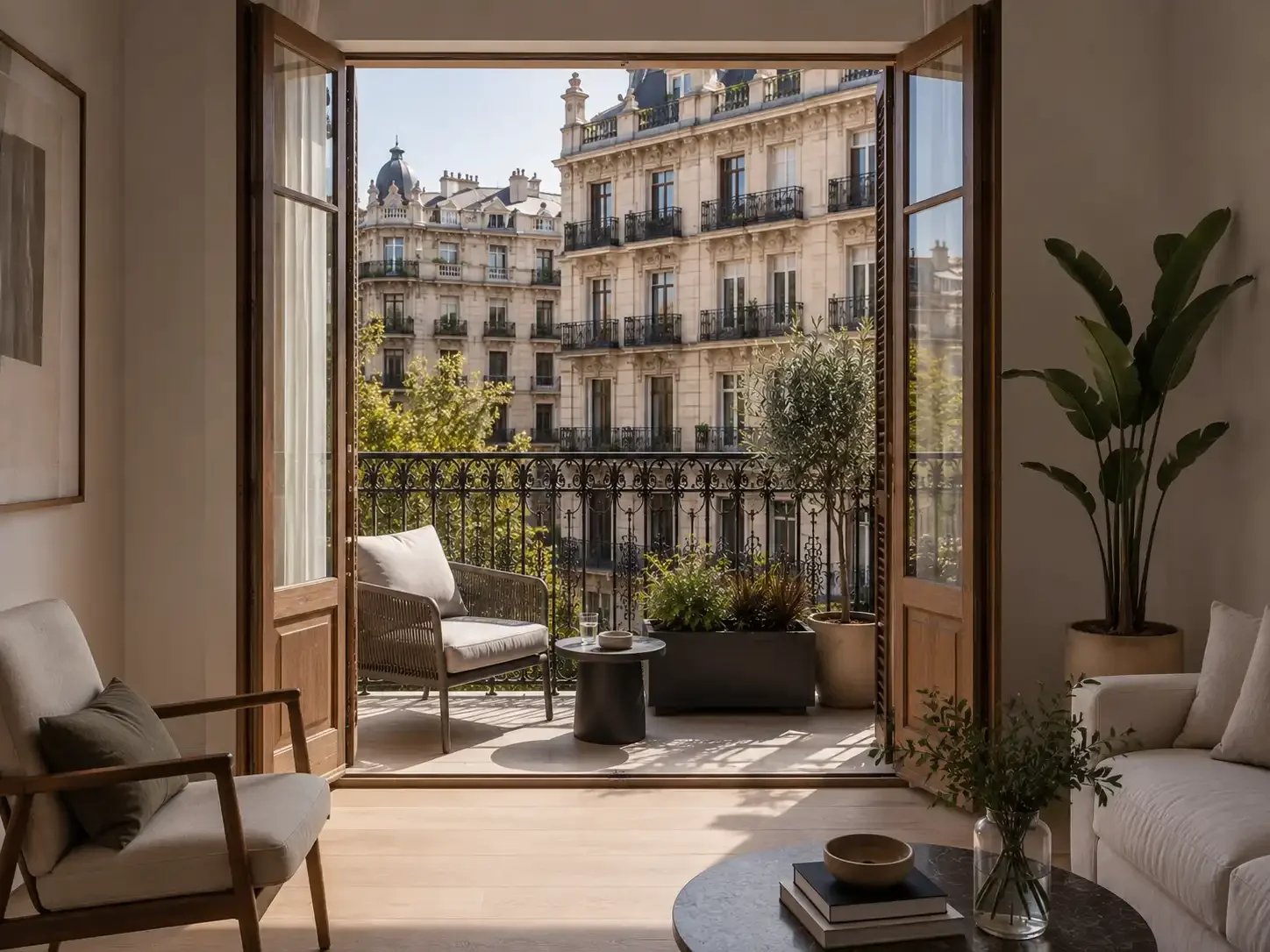
A balcony in Barcelona is not an accessory. It is an extra room. Even a balcón of three or four square metres, furnished with a small table and two chairs, increases perceived living space by a significant margin in the tenant's mind. We have seen tenants choose a 65-square-metre flat with a south-facing balcony over an 80-square-metre flat without outdoor space and pay more for the smaller one.
Based on patterns we've observed across the properties we manage, flats with usable balconies tend to command a clear rental premium over identical internal flats. In Gràcia and Sant Antoni, where terrace culture is strongest, that premium becomes even more pronounced.
When There Is No Balcony: The Art of Compensation
Not every Barcelona flat has an outdoor space. Many interior flats in the Gothic Quarter or El Born rely on courtyard windows. But light can be amplified through intelligent design:
Mirror placement opposite windows doubles perceived light. A large mirror on the wall facing the main window is the single most cost-effective design intervention we recommend.
Wall colour: Warm whites and soft greiges reflect light without the clinical coldness of pure white. Avoid dark accent walls in small or poorly lit flats; they photograph well, but they shrink space emotionally.
Window treatments: Sheer linen curtains filter harsh afternoon sun while preserving brightness. Heavy blackout curtains are necessary for bedrooms, but in living areas, they signal a hotel room, not a home.
Artificial light layers: A single ceiling fixture is inadequate. Floor lamps, wall sconces, and under-cabinet kitchen lighting create depth and warmth after sunset.
Property Manager's Insight: We never list a flat without staging the balcony or terrace. A modest investment in outdoor furniture, a folding bistro set, a potted olive tree and a small lantern routinely returns many times over in tenant interest and rental premium.
If your property will remain unoccupied for several months, you may also want to read our guide on what happens when a Barcelona apartment stays empty for six months.
5 Material Quality: Felt, Not Named
There is a misconception among property owners that tenants want brand names. They do not. What they want is to touch a surface and feel that someone cares. A solid oak dining table with visible grain. Linen cushions that soften with washing. Ceramic plates with weight. These are not luxury items. They are signals of intention and tenants read them instantly.
Why Cheap Furniture Costs More
We understand the impulse. Furnishing a rental flat entirely from budget retailers seems efficient. It is not. Mass-produced flat-pack furniture degrades visibly within a single tenancy. Drawers stick. Surfaces chip. The message to the tenant is clear: this is temporary, disposable, unloved. And tenants treat disposable spaces accordingly.
Conversely, a flat furnished with second-hand solid wood, vintage ceramics, and quality textiles sourced from Barcelona's many antique markets and artisan workshops feels curated. It feels like someone chose this. Tenants respect it more. They stay longer. They cause less damage. The psychology is straightforward: people care for spaces that feel cared for.
Our Furnishing Principles
Wood over laminate. A €400 reclaimed wood coffee table outlasts and outperforms an €80 particleboard equivalent across every metric that matters.
Natural textiles. Cotton, linen, wool. Synthetic fabrics look tired within months and trap odours. Natural materials age gracefully.
Local ceramics. Barcelona has exceptional ceramicists. A few handmade pieces on open shelving tell a story and resist the anonymity of mass production.
Quality bedding. High-thread-count cotton sheets and a proper duvet, not a thin synthetic comforter, transform a bedroom from functional to inviting. The cost difference is modest. The tenant's perception of value is immeasurable.
The Long View: In our experience managing homes across Barcelona, flats furnished with mid-range quality materials tend to generate higher rental income over five years than those furnished cheaply. The initial outlay is higher, but replacement costs are lower, tenant turnover is reduced, and the property's condition at checkout is consistently better.
These results are much easier to achieve with proactive property management. Learn more about our approach to remote property management in Barcelona.
Putting It Together: A Real Example
Last year, we took over management of a 72-square-metre two-bedroom flat in Eixample Esquerra. The owner had been struggling with vacancy for three months, then a six-month tenancy, then another two months empty. The rent was below market for the area, and each void period was eroding the annual yield.
We proposed a targeted investment of €6,500:
Built-in wardrobes in both bedrooms (€2,200)
A small desk area by the living room window (€350)
Kitchen peninsula with bar stools and lighting (€2,800)
Balcony furniture and potted plants (€400)
Textile and furnishing upgrades (€750)
The flat was re-listed at a higher monthly rate. It was rented within ten days to a remote-working couple from Amsterdam on a fourteen-month lease. The owner's annual income increased substantially. The investment was recovered in under two years. More importantly, the flat has not been vacant since.
This is not an exception. It is the pattern we see repeatedly when design decisions are made with the tenant's daily experience in mind rather than the owner's convenience.
Frequently Asked Questions
Does staging really increase rental income?
Yes, consistently, in our experience. A staged flat photographs better, attracts more viewings, and rents faster. Tenants form an emotional connection within the first sixty seconds of a viewing. A furnished, thoughtfully arranged space allows them to picture themselves living there immediately. We have seen staged flats achieve meaningfully higher rents than identical unfurnished properties in the same building.
Should I renovate before renting or after finding tenants?
Before. Tenants cannot envision potential. They see what is in front of them. A flat that shows well from day one attracts better tenants, commands a higher rent, and avoids the awkwardness of mid-tenancy works. If your flat has been vacant for more than six weeks, renovation is almost always worth considering.
Do tenants care about artwork and decoration?
More than most owners assume. A bare wall feels institutional. A single framed print, a small mirror, a ceramic vase on a shelf, these details signal that the flat is loved, not just maintained. We are not suggesting gallery walls. One or two well-chosen pieces per room is enough. Tenants notice. They mention it in feedback. It matters.
Are second-hand furniture pieces a good investment?
Often, yes. Barcelona has excellent vintage and antique markets, from Encants to neighbourhood flea markets. A €150 mid-century wooden chair from a second-hand dealer outperforms a €60 new chair from a budget chain in every way: durability, aesthetics and tenant perception. The key is curation, not accumulation. One beautiful vintage piece elevates an entire room.
Which wall colours work best in Barcelona apartments?
Warm whites, soft greiges, and muted terracottas work best. Barcelona's light has a warm, golden quality; cool greys and stark whites fight against it. In small or dark flats, we recommend lighter tones throughout. In brighter flats, a single accent wall in a deep olive or dusty blue can add depth without shrinking the space. Always test paint in natural light before committing.
Should I furnish every bedroom?
Yes, if you are targeting the mid-term or expat market. An empty bedroom forces the tenant to buy furniture, which signals a temporary arrangement. A furnished bedroom, even simply, with a quality bed, bedside table, and lamp says "stay." In our experience, fully furnished two-bedroom flats rent faster and achieve longer tenancies than partially furnished equivalents.
How much should I spend before renting my property?
It depends on the flat's current condition and your target tenant. For a quality furnished rental that commands above-market rates, we typically recommend budgeting €8,000–€12,000 for a 70–85 m² two-bedroom flat. This includes furniture, textiles, kitchenware, and minor design touches. Budget options start lower but will not achieve the same rental premium or tenant retention. The question is not how much you spend but whether every euro returns value.
Does good interior design reduce tenant turnover?
Significantly. Tenants leave for many reasons: job changes, relationships, life shifts — but they rarely leave a flat that feels like home. Good design creates emotional attachment. A tenant who has hung their clothes in a proper wardrobe, worked at a sunlit desk, and hosted friends on a balcony thinks twice before moving. In our managed portfolio, well-designed flats consistently achieve longer tenancies than poorly designed ones at the same price point.
Is professional property styling worth it?
For high-value rentals, absolutely. A professional eye sees what an owner misses: scale, flow, light balance, colour harmony. At CASAS CON CARIÑO, we include design consultation as part of our property management service because we have seen the difference it makes. A styled flat does not just rent for more. It rents to better tenants who treat it with respect.
Which neighbourhoods in Barcelona offer the best rental yield for furnished flats?
Eixample, Gràcia, and Sant Antoni consistently deliver the strongest yields for furnished rentals due to expat demand, transport links, and lifestyle amenities. The Gothic Quarter and El Born perform well for short-term and mid-term lets but require more active management. The right neighbourhood depends on your target tenant profile and how hands-on you want to be.
How does CASAS CON CARIÑO help with rental property design?
We provide end-to-end property management, including pre-rental design consultation, renovation coordination, furnishing procurement, and ongoing maintenance. We do not just find tenants, we prepare your property to attract the right ones, at the right price, for the long term.
Final Thought: Design as Stewardship
There is a word we use often at CASAS CON CARIÑO: cariño. It means care, affection, tenderness. It is not a design style. It is an intention. When you design a rental flat with cariño, you are not merely decorating. You are stewarding a space where someone will wake up, work, cook, rest, and build a life, however temporary.
Tenants feel that intention. They pay for it. They stay for it. And they leave your property in better condition because of it. Smart design in Barcelona's rental market is not an expense. It is the most reliable form of yield protection we know.
Thinking of renting out your Barcelona property?
We manage homes across the city with the care they deserve and the returns their owners expect. From design consultation to full property management, we handle every detail so you don't have to.
Get in touch to discuss how we can maximise your rental yield in 2026.