Understanding Barcelona's Community of Owners: What Non-Resident Buyers Need to Know
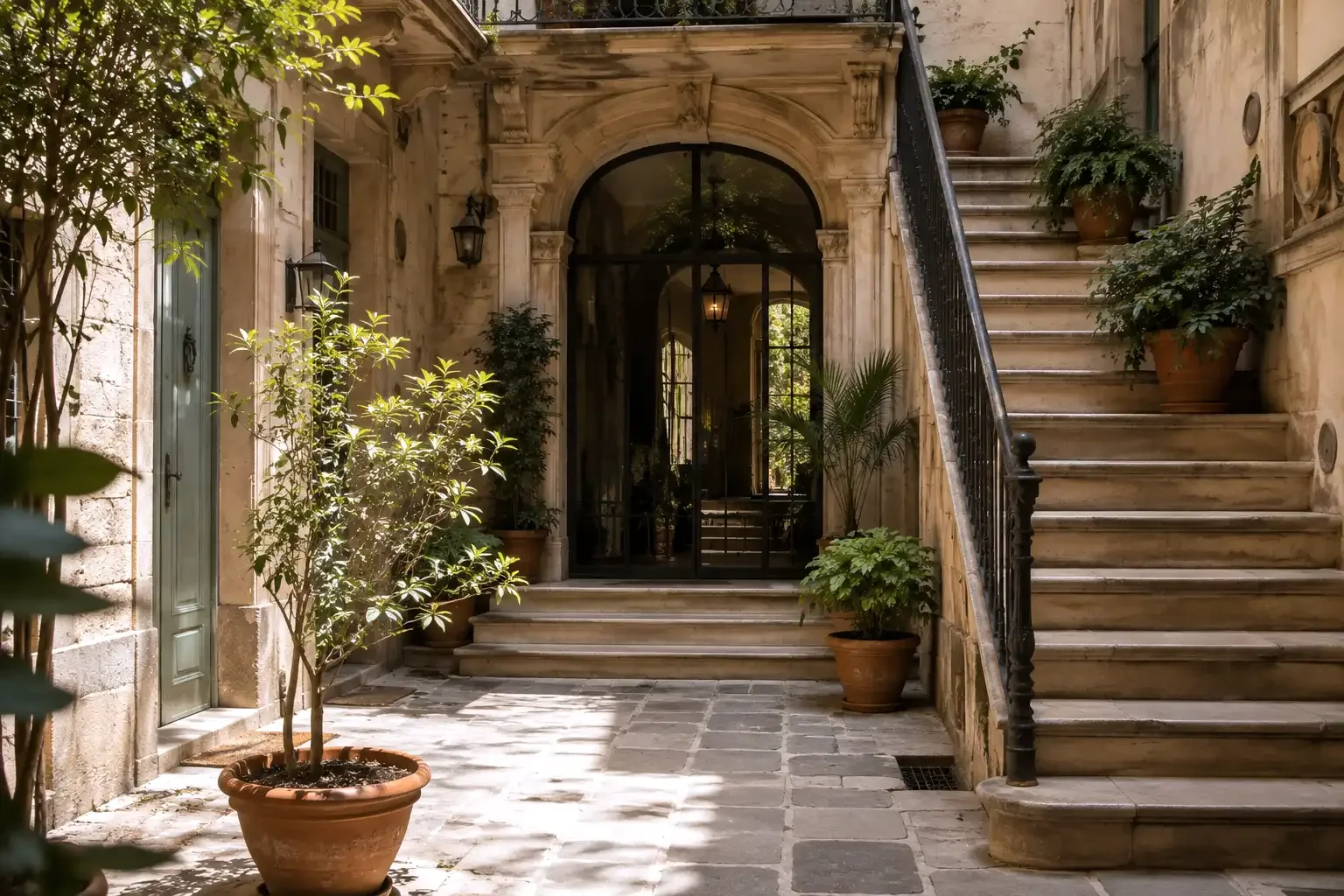
A calm, practical guide to one of the most misunderstood aspects of owning property in Barcelona: the community that comes with the keys.
You Bought the Apartment. You Also Joined a Club.
The moment you complete the purchase of an apartment in Barcelona in a building governed by horizontal property rules, you become part of its comunidad de propietarios (community of owners). It is not something you separately apply to join: ownership brings community rights and obligations with it.
This community is not a social club. In Catalonia, horizontal property is governed principally by Book Five of the Catalan Civil Code, which regulates how the community is organised, how common expenses are shared, how decisions are adopted and how owners may challenge certain resolutions. For non-resident owners, the community can feel distant and opaque until a bill arrives, a vote is called or a neighbour raises an issue. Then it becomes very real, very quickly.
This guide explains what the community is, what it can do, what it cannot do, and how to navigate it without being physically present. Whether your apartment is in a grand Eixample building with a porter and an elevator, a Gràcia walk-up with a rooftop terrace, or a modern Poblenou complex with shared facilities, the same Catalan legal framework applies, although each building has its own statutes, internal rules, finances and day-to-day dynamics.
Table of Contents
What Is a Comunidad de Propietarios?
A comunidad de propietarios is the community formed by the owners of the private units in a building or residential complex subject to horizontal property rules. Stairwells, elevators, roofs, façades, courtyards, gardens, parking areas and other shared facilities may fall under community management. The community operates through legally defined governing bodies and can hold rights, incur obligations and take legal action in matters concerning the building.
The community's governing bodies include the presidency, secretariat, administration and the owners' meeting (junta de propietarios). Day-to-day administration is often entrusted to a professional administrador de fincas. In practice, a good administrator can be an important source of information about the building's accounts, maintenance history, planned works and community decisions.
Your share of the community, called your cuota de participación or participation quota, is established in the property's title and is relevant to the distribution of many common expenses and to voting. It is not something an individual owner can simply alter unilaterally; changing participation quotas generally requires the level of agreement established by Catalan law.
Your Obligations as an Owner
1. Pay Community Fees on Time
Community fees, often referred to as cuotas de comunidad, contribute to the building's shared running costs. Depending on the property, these may include cleaning, elevator maintenance, building insurance, gardening, porter or concierge services, administration and other common services.
The amount varies substantially from one building to another. A historic building with a lift, porter and demanding maintenance programme may have a very different cost structure from a smaller walk-up or a newer residential complex. Buyers should therefore review the actual accounts of the specific community rather than relying on a city-wide average.
2. Contribute to Maintenance and Repairs
Beyond regular community expenses, the owners may approve extraordinary contributions, commonly called derramas, for major works such as roof repairs, façade restoration, elevator works, plumbing upgrades or energy-efficiency improvements. When a validly adopted community resolution makes a cost payable by the owners, an owner may be required to contribute even if they did not personally support the project.
For buyers, the important question is not only what the current monthly fee is, but what major works have already been approved, discussed or anticipated. If those works involve substantial renovation or technical coordination, understanding how project development and construction in Barcelona is managed can also help you assess the practical implications before committing.
3. Comply with the Statutes and Internal Rules
Communities may have statutes (estatutos) and internal rules (reglamento de régimen interior) governing matters connected with the building and use of common areas. These documents can affect renovations, use of shared spaces, noise, building appearance and, in some cases, permitted uses of private units.
Tourist accommodation deserves particular attention. In Catalonia, the horizontal-property rules differ from the general Spanish regime, and recent legal and registry decisions confirm that restrictions on tourist use in Catalan communities must be analysed under the Catalan Civil Code. A statutory amendment prohibiting tourist activity can, in the relevant circumstances, require the qualified four-fifths majority established by Catalan law. Existing rights, registration, sector-specific tourism rules and the precise wording of the community statutes can all matter, so buyers intending to use a property for tourist accommodation should obtain specific legal advice before purchase.
4. Provide an Address for Communications
The community needs an address through which notices and meeting communications can reach you. Under Catalan rules, owners can communicate an address to the community secretary for notifications. If no address has been provided, communications may be directed to the privately owned unit itself in accordance with the applicable rules.
For an owner living abroad, keeping these details current is essential. Otherwise, important notices about meetings, works, fees or disputes may be missed.
5. Allow Necessary Access
Owners may have to permit access to their apartment when it is reasonably necessary to carry out works affecting common elements or shared installations. This can arise with plumbing risers, structural inspections, façades, utility systems or other building-wide maintenance.
For non-resident owners, having a trusted local contact who can coordinate access can prevent delays and unnecessary conflict.
Your Rights as an Owner
1. Attend and Vote at General Meetings
The junta de propietarios is the owners' meeting. Catalan law requires an ordinary meeting at least once a year to approve accounts and budgets and to elect the people who hold community offices. Owners may attend personally or be represented in accordance with the applicable rules.
Voting is connected both to ownership and to participation quotas, and owners with overdue community debts may lose their voting right unless the relevant legal conditions for preserving it are met.
2. Receive and Review Community Documentation
Owners should keep track of meeting notices, approved accounts, budgets, minutes and relevant community documentation. For non-resident owners, reviewing the annual accounts and meeting minutes should be part of routine property oversight.
If something in the finances or a resolution is unclear, request clarification promptly from the administrator or community secretary rather than waiting until a problem becomes urgent.
3. Participate in Community Governance
Owners can participate in the community's governing structure, including the presidency and other roles provided for by Catalan law and the community's organisation. For someone living abroad, holding an office may not be practical, but participation through meetings and representation remains important.
4. Challenge Certain Community Decisions
Community resolutions can be challenged in court on grounds established by the Catalan Civil Code. The deadline is not a universal 30-day period. Depending on the grounds, the action generally expires after one year for resolutions contrary to law, the constitutive title or the statutes, or involving abuse of rights, and after three months for resolutions contrary to the community's interests or seriously harmful to an owner. The period is calculated from notification of the minutes or the relevant annex.
Eligibility to challenge a resolution also depends on factors such as how the owner voted or responded and, in general, being up to date with due community debts or having deposited the amount as required. Prompt legal advice is therefore important.
Community Fees and Extraordinary Levies
| Building Profile | Regular Cost Profile | Typical Shared Costs | Potential Extraordinary Works |
|---|---|---|---|
| Historic Eixample or Gràcia building with lift and porter | Often higher than a simple building because of staffing, lift and maintenance needs | Lift, cleaning, porter or concierge, insurance, administration and maintenance | Façade, roof, structural or lift works can create significant derramas |
| Older walk-up without a lift | Often simpler, but highly dependent on the building's condition | Cleaning, insurance, administration and basic common maintenance | Roof, plumbing, façade or future accessibility works may be material |
| Mid- or late-20th-century residential block | Varies according to lift, gardens, parking and shared services | Lift, cleaning, insurance, administration and common-area maintenance | Lift, façade, installations and energy-efficiency upgrades may arise |
| Newer residential complex with amenities | Can be substantial where there are extensive shared facilities | Lift, concierge, garden, pool, gym, parking or other amenities | Long-term maintenance of shared facilities and technical systems |
Critical warning for buyers: before completing a purchase, the community debt position should be checked carefully and the legally required documentation relating to community debts should be reviewed with the transaction professionals. Under Catalan law, the property is subject to a real charge for certain unpaid common expenses corresponding to the overdue part of the current year and the four immediately preceding years. This is one reason community debt due diligence matters before completion.
Do not look only at whether the seller is currently paying the monthly fee. Review recent accounts, minutes, approved derramas and planned works as well. These checks form part of the broader due diligence that should accompany any real estate investment in Barcelona.
How Community Decisions Are Made
Community decisions do not all use the same voting threshold. Catalan law distinguishes between ordinary decisions, qualified-majority decisions and matters requiring unanimity.
| Decision Category | General Rule in Catalonia | Examples |
|---|---|---|
| Many ordinary community matters | Simple-majority rules apply, subject to the detailed voting requirements in the Catalan Civil Code | Many ordinary management decisions and certain works or services |
| Qualified-majority matters | Four-fifths of owners with voting rights representing four-fifths of participation quotas in the cases specified by law | Certain amendments to the constitutive title or statutes and other matters expressly subject to the qualified majority |
| Unanimity matters | All owners with voting rights in the cases specified by law | Changing participation quotas and certain fundamental changes to the horizontal-property regime |
The exact threshold depends on the decision being taken, and Catalan law also contains rules for counting absent owners in certain qualified-majority and unanimity situations. For a non-resident owner, this makes reading the notice, agenda and minutes especially important.
If tourist accommodation is part of your investment plan, do not rely on a generic statement that a Spanish community can approve or prohibit it by a three-fifths vote. For property in Barcelona, the Catalan horizontal-property regime applies. Recent registry guidance concerning a Barcelona property confirms that the general Spanish LPH three-fifths rule is not the governing rule for Catalan horizontal property; a statutory prohibition on tourist activity may instead fall under the Catalan four-fifths framework. The individual property's statutes and existing rights still need to be checked.

The Non-Resident Owner's Practical Setup
Living abroad does not remove your community obligations. It simply makes good administration more important. For owners who are away for much of the year, professional property management in Barcelona can provide the local follow-up needed to keep community communications, access and day-to-day property issues under control.
1. Register a Reliable Contact Address
Provide the community secretary or administrator with an address where you can reliably receive communications. Depending on how the community operates, you may also agree practical electronic communication arrangements, but make sure the legally relevant contact details are properly recorded.
If you use a lawyer or property manager as a local contact, confirm exactly which notices they are authorised to receive and how quickly they will forward them to you.
2. Set Up Reliable Payment Arrangements
Arrange a reliable method for paying community fees and approved extraordinary contributions. Direct debit is often the simplest practical option where available.
Do not assume that silence means everything is paid. Review your Spanish bank account and community statements periodically so an administrative error does not turn into an overdue debt. Our annual property-owner checklist for Barcelona covers community fees alongside the other recurring responsibilities international owners should monitor throughout the year.
3. Arrange Representation for Meetings
If you cannot attend an owners' meeting, arrange valid representation or delegation in accordance with Catalan law. A lawyer, property manager or another appropriate representative may be able to attend for you if the required documentation is in place.
Representation should be prepared for the relevant meeting rather than treated as an informal standing assumption.
4. Read the Annual Minutes
When meeting minutes arrive, read them promptly. This is where planned renovations, fee increases, disputes, rule changes and future derramas often become visible.
Prompt review also matters because the legal periods for challenging certain resolutions are calculated from notification of the minutes or relevant annex, not from a generic 30-day deadline.
5. Review Community Debt Information Before Major Transactions
Before buying or selling, and whenever a transaction may be affected by community liabilities, make sure the current debt position is properly documented and reviewed. For a purchase, this should form part of the legal and financial due diligence before completion.
Red Flags in Community Finances
| Red Flag | What It May Mean | What to Do |
|---|---|---|
| Unusually low regular fees | The community may be keeping costs low, but it can also indicate deferred maintenance or limited reserves | Review recent accounts, budgets, minutes and planned works |
| Significant owner arrears | Cash-flow pressure may make maintenance and approved works harder to fund | Ask for the available information on outstanding community debts and how they are being managed |
| Weak or inadequate reserve planning | Future major works may require larger extraordinary contributions | Review the reserve fund, recent budgets and anticipated capital works |
| Pending legal disputes | Disputes can affect finances, works or the use of parts of the building | Ask what proceedings are active and obtain professional advice where material |
| Poor access to basic records or unclear accounts | It may indicate weak administration or a lack of transparency | Request clarification and review the available accounts and minutes before committing |
Your Community Checklist
Before You Buy
Request the community statutes and applicable internal regulations
Check for restrictions relevant to your intended use of the property
Review the seller's community debt position and the required debt documentation
Review recent community accounts and meeting minutes
Ask about approved or anticipated major works and extraordinary contributions
Confirm the current community fee and what it covers
After You Buy
Register your contact details with the community secretary or administrator
Set up a reliable method for paying community fees
Arrange valid representation when you cannot attend meetings
Review accounts, budgets and meeting minutes promptly
Check community rules before starting renovation work
Inform the relevant community representatives when works or access arrangements require coordination
Ongoing
Monitor payments and community statements
Read meeting minutes promptly after receiving them
Seek legal advice quickly if a resolution may need to be challenged
Keep track of approved works, reserve planning and future derramas
Maintain clear communication with the president and administrator

Frequently Asked Questions
What is a comunidad de propietarios?
It is the community formed by the owners of properties in a building or complex governed by horizontal property rules. In Catalonia, its organisation, decision-making and owners' rights and obligations are principally regulated by Book Five of the Catalan Civil Code. Membership follows from ownership of a unit within the regime.
Can I opt out of the community?
No. If your property forms part of a horizontal-property regime, you cannot simply opt out of the community or ignore valid community obligations. Buying the property means acquiring the rights and obligations attached to ownership within that regime.
How are community fees calculated?
Participation quotas are an important basis for distributing community expenses, although the constitutive title, statutes and legally valid community arrangements should also be reviewed to understand how a particular expense is allocated. Your participation quota is recorded as part of the property's horizontal-property documentation.
What happens if I do not pay community fees?
The community can pursue unpaid common expenses and reserve-fund debts using the procedures available under Catalan law, including a payment-order procedure when the legal requirements are met. Owners with outstanding community debts can also lose their right to vote at meetings unless they meet the conditions established by law.
In addition, certain community debts are protected by a real charge affecting the property. In Catalonia, this protection covers the overdue part of the current year and the four immediately preceding years. For non-resident owners, reliable payment arrangements and current contact details are therefore essential.
Can the community block me from using my apartment as tourist accommodation?
Potentially, yes, but the Barcelona answer must be analysed under Catalan law rather than by automatically applying the general Spanish LPH rule. Catalan communities can adopt restrictions through the mechanisms and voting thresholds established by the Catalan Civil Code, and recent registry guidance concerning Barcelona confirms the relevance of the four-fifths framework for a statutory prohibition on tourist activity.
Tourist accommodation is also subject to separate tourism, planning, licensing and registration rules. If tourist use is part of your purchase strategy, check the community statutes and the property's administrative status before buying and obtain specific legal advice.
What is a derrama?
A derrama is an extraordinary contribution approved to fund expenses that are not adequately covered by the regular community budget, often for significant building works or repairs. Whether and how much an owner must contribute depends on the valid community resolution and the applicable allocation rules.
How much should I budget for community fees?
There is no reliable single Barcelona-wide figure. Costs vary according to the building's size, age, services, staffing, amenities, maintenance condition and current works programme.
The best budgeting method is to request the actual community fee, recent accounts, recent minutes, reserve information and details of approved or anticipated works for the specific property you are considering.
Can I vote if I live abroad?
Yes. Living abroad does not in itself remove your participation rights. If you cannot attend, Catalan law provides mechanisms for representation or delegation. Make sure the documentation is valid for the relevant meeting and that the community has your correct contact details.
What is an administrador de fincas?
An administrador de fincas is the professional who may be entrusted with day-to-day administration of the community, including tasks such as implementing community decisions, managing payments and accounts, coordinating suppliers and helping prepare community documentation. The exact scope depends on the appointment and the community.
Should I read the community statutes before buying?
Absolutely. The statutes and other community rules can affect how the property and common areas may be used, how certain decisions are made and what restrictions apply. They should be reviewed together with recent minutes and accounts before you commit to the purchase.
What is the junta de propietarios?
The junta de propietarios is the owners' meeting. It approves matters such as accounts and budgets, elects community officeholders and decides on works, services and other issues within its powers. Catalan law requires an ordinary meeting at least once a year.
Can community debts follow the property?
Certain debts can affect the property itself. Under Catalan law, the property is subject to a real charge for qualifying common expenses corresponding to the overdue part of the current year and the four immediately preceding years. This is why the community debt position must be checked carefully before completing a purchase.
How do I challenge a community decision?
The answer depends on why the resolution is being challenged. Under the Catalan Civil Code, the limitation period is generally one year for resolutions contrary to law, the constitutive title or statutes, or involving abuse of rights, and three months for resolutions contrary to the community's interests or seriously harmful to an owner. These periods run from notification of the minutes or relevant annex.
There are also standing and payment-status requirements. If a resolution materially affects you, obtain legal advice promptly rather than waiting until the deadline approaches.
Do community rules vary by neighbourhood?
The Catalan legal framework does not change simply because an apartment is in Eixample, Gràcia, Poblenou or Sarrià. What does vary from building to building is the constitutive title, statutes, internal rules, services, maintenance history, finances and the decisions previously adopted by the owners.
For due diligence, the individual building matters more than assumptions about the neighbourhood.
Can a property manager handle my community obligations?
A property manager can provide valuable local coordination: monitoring communications, following payments, coordinating access, reviewing routine documentation and, where properly authorised, representing you in relevant situations. The exact authority depends on the mandate or proxy you grant.
For owners who live abroad, this kind of local oversight can form an important part of managing a Barcelona property from a distance.
A Final Thought
The comunidad de propietarios is not an obstacle. It is the structure through which owners collectively manage and maintain the shared parts of a Barcelona building. A well-run community can help protect the building and the value of the homes within it. Poor finances, deferred maintenance or weak communication can create the opposite effect.
Your job as a non-resident owner is not to control the community. It is to stay informed, stay current and remain engaged from a distance. The greatest risks often arise not from disagreeing with a decision, but from discovering too late that a decision was made, a payment became due or major works were already planned.
Buying in Barcelona and want to understand the full picture before you commit? Casas Con Cariño helps international owners coordinate the practical side of property ownership in Barcelona, from local oversight to ongoing management. We can also help you plan what happens after the purchase, so the property remains properly managed while you are away.